Author: fivebyfivefinds

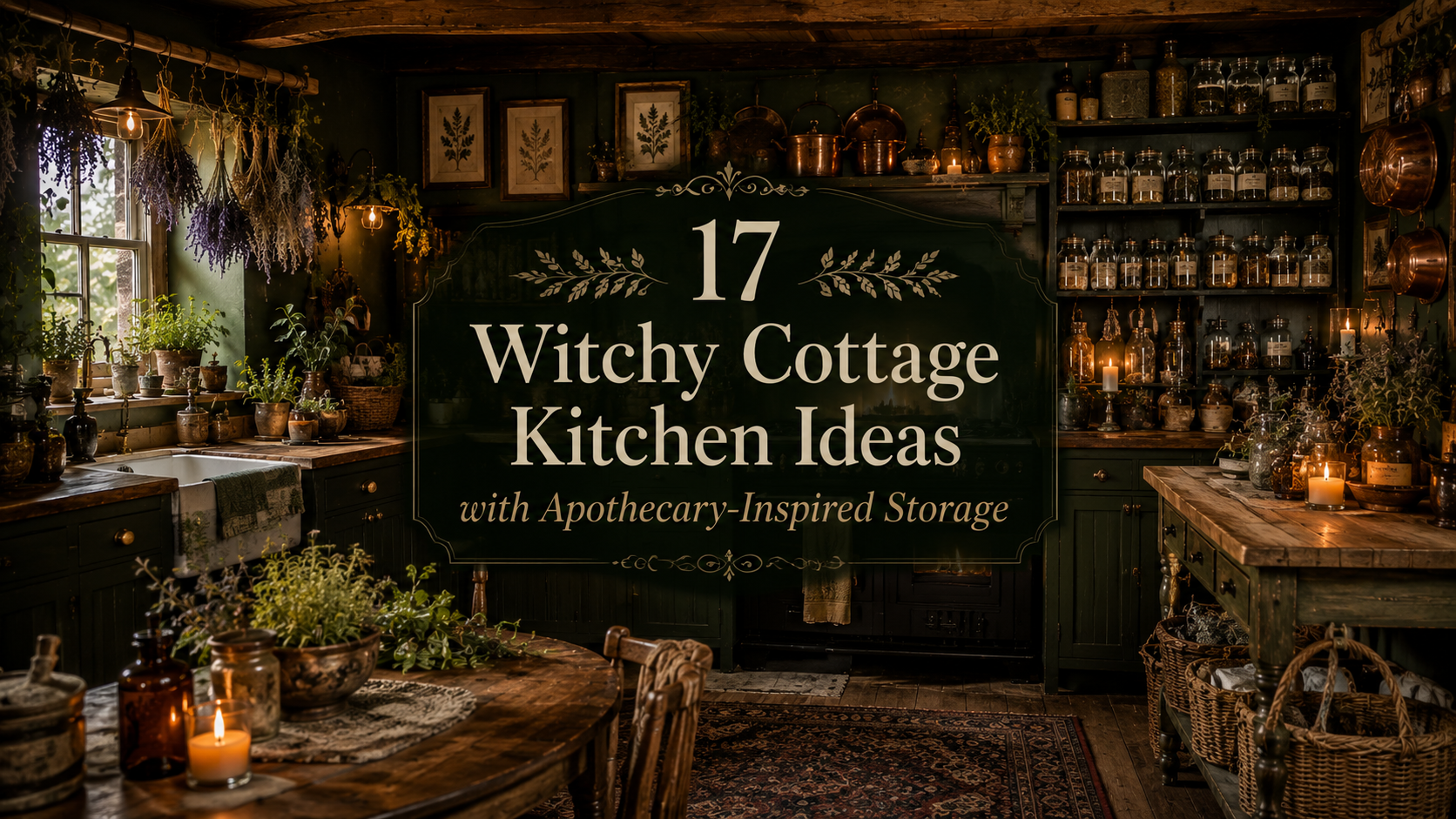
  • 17 Witchy Cottage Kitchen Ideas with Apothecary-Inspired Storage

    17 Witchy Cottage Kitchen Ideas with Apothecary-Inspired Storage

    A Witchy Cottage Kitchen often combines practical storage with collected character. One of the most recognizable features of this style is apothecary-inspired organization, where everyday ingredients, herbs, cookware, and kitchen essentials become part of the decor. Open shelving, glass jars, hanging herbs, and vintage containers create a layered look that feels both functional and atmospheric. These Witchy Cottage Kitchen ideas focus on storage solutions that contribute to the overall aesthetic while supporting everyday use, making them a natural fit for anyone exploring Witchy Cottage Ideas and Witchy Cottage Decor throughout their home.

    1. Store Dried Herbs in Glass Apothecary Jars

    Clear apothecary jars make it easy to organize dried herbs while showcasing their natural colors and textures. Lavender, rosemary, chamomile, mint, and sage create visual interest when displayed together on open shelves or countertops. Uniform containers help maintain a cohesive appearance even when storing a variety of ingredients. This approach works particularly well in kitchens where storage is visible rather than concealed behind cabinet doors.

    2. Install Open Shelving for Everyday Ingredients

    Open shelving allows frequently used items to become part of the room’s design. Glass jars filled with grains, teas, spices, and baking ingredients can be arranged alongside pottery, candles, and small plants. Mixing practical items with decorative pieces helps the shelves feel curated rather than purely utilitarian. Open storage is most effective when there is enough wall space to avoid overcrowding the shelves.

    3. Hang Herb Bundles from Exposed Beams

    Dried herbs suspended from ceiling beams, shelf brackets, or hanging racks add texture and vertical interest to a Witchy Cottage Kitchen. The display reinforces the herbalist influence often associated with apothecary-inspired interiors while keeping herbs within easy reach. Organized groupings tend to feel more intentional than large clusters spread throughout the room.

    4. Create a Dedicated Tea and Tincture Shelf

    A dedicated shelf for teas, herbal blends, tinctures, and glass bottles creates a strong apothecary focal point. Grouping similar items together helps the collection feel organized while allowing labels and containers to become decorative elements. This setup is especially useful in kitchens where beverages and herbal preparations are used regularly.

    5. Use Vintage Wooden Crates for Storage

    Vintage crates provide accessible storage for produce, linens, and pantry items while adding age and texture to the room. Stacked crates can also function as display shelving for jars and baskets. Their flexibility makes them useful in kitchens that need additional storage without major renovations.

    6. Display Copper Pots and Kitchen Tools

    Copper cookware, brass utensils, and cast iron pieces contribute to the collected appearance common in Witchy Cottage Decor. Hanging frequently used items keeps them accessible while creating visual interest above counters and workspaces. This approach works best when storage remains focused on items that serve a practical purpose.

    7. Organize Pantry Staples in Labeled Glass Containers

    Glass containers create consistency while allowing ingredients to remain visible. Handwritten labels, vintage tags, or simple printed labels can reinforce the apothecary aesthetic without making the storage feel overly themed. Clear containers are particularly helpful for maintaining inventory in busy kitchens.

    8. Add a Freestanding Apothecary Cabinet

    A freestanding cabinet offers dedicated space for herbs, spices, teas, baking ingredients, and specialty kitchen supplies. Glass-front doors allow collections to remain visible while reducing visual clutter. This solution is ideal for kitchens that require additional storage but have limited wall space.

    9. Use Woven Baskets for Rustic Storage

    Woven baskets help soften shelves and countertops while providing storage for produce, linens, and miscellaneous kitchen essentials. Natural materials complement wood cabinetry, botanical decor, and other cottage-inspired finishes. Baskets are especially useful for organizing items that do not fit neatly into jars or containers.

    10. Create a Botanical Corner Shelf

    A corner shelf filled with herbs, small plants, dried flowers, and apothecary bottles can turn an overlooked area into a decorative feature. Combining living and dried botanicals adds variety while reinforcing the natural influence behind the design. Corner storage often makes the most sense in kitchens with limited countertop space.

    11. Store Spices in Matching Glass Bottles

    Matching spice bottles create visual consistency while making frequently used ingredients easy to access. Arranged on shelves or racks, they contribute to the organized appearance associated with apothecary-inspired storage. This method works especially well for cooks who keep a large variety of spices on hand.

    12. Incorporate Antique Storage Pieces

    Antique cupboards, hutches, and small cabinets bring character while offering practical storage. Their worn finishes and unique details fit naturally within a Witchy Cottage Kitchen. Older furniture pieces are often useful when standard cabinetry does not provide enough storage capacity.

    13. Style Shelves with Books and Herbs

    Combining cookbooks, herbal references, candles, and dried botanicals creates layered shelving displays that feel both functional and decorative. Varying heights and textures helps prevent shelves from appearing too uniform. This arrangement works best when frequently used items remain easily accessible.

    14. Add Hanging Pot Racks

    A hanging pot rack creates storage overhead while freeing cabinet space below. Copper, brass, and cast iron cookware contribute to the room’s overall aesthetic while remaining convenient for daily use. Ceiling-mounted storage is particularly useful in kitchens where cabinet space is limited.

    15. Display Mortars, Pestles, and Wooden Bowls

    Traditional kitchen tools naturally complement apothecary-inspired decor. Mortars, pestles, wooden bowls, and stone vessels add texture while reinforcing the practical roots of herbal preparation and cooking. Decorative displays are most successful when the tools remain functional rather than purely ornamental.

    16. Combine Candlelight with Open Storage

    Candles placed among shelves, cabinets, and storage displays help highlight collections while adding warmth to the room. Lanterns, pillar candles, and wall sconces can contribute to the layered atmosphere often associated with Witchy Cottage Ideas. Supplemental task lighting remains important for food preparation and everyday kitchen work.

    17. Build a Collected Pantry Wall

    A pantry wall filled with jars, baskets, bottles, herbs, and cookware creates a strong visual centerpiece. The combination of practical storage and decorative layering captures the essence of apothecary-inspired design while maximizing organization. This approach is most effective when storage systems remain consistent enough to support daily use.

    Final Thoughts

    Apothecary-inspired storage brings both organization and character to a Witchy Cottage Kitchen. Glass jars, herbal displays, vintage storage pieces, open shelving, and botanical details transform everyday essentials into part of the overall design. When combined thoughtfully, these elements support the practical needs of the kitchen while reinforcing the layered atmosphere associated with Witchy Cottage Decor and other Witchy Cottage Ideas throughout the home.

  • 19 Witchy Cottage Living Room Ideas with Green Witch Style

    19 Witchy Cottage Living Room Ideas with Green Witch Style

    A Witchy Cottage Living Room combines natural materials, vintage details, botanical decor, and layered texture to create a space that feels grounded and lived in. Green witch style brings that look closer to nature through plants, herbs, earthy colors, wood finishes, candlelight, and collected objects. For a cottage witchy living room, the strongest designs balance atmosphere with practical comfort, especially when the room needs to support daily seating, storage, and lighting. These ideas focus on building a cozy witchy cottage living room through choices that feel intentional, useful, and visually connected.

    1. Fill Open Shelving with Plants and Apothecary Bottles

    Open shelving works well in a Witchy Cottage Living Room because it allows practical storage to become part of the design. Potted herbs, trailing vines, amber bottles, ceramic vessels, dried flowers, and vintage tins can be arranged together for a collected green witch look. The key is to vary height and texture so the shelves feel layered instead of cluttered. This approach works especially well in rooms with built-ins, bookcases, or unused wall space that needs visual depth without adding more furniture.

    2. Choose Deep Forest Green Walls

    Deep forest green walls create a strong foundation for green witch style. The color pairs naturally with wood furniture, brass accents, botanical prints, and cream or brown textiles. It also gives candlelight and warm lamps a richer backdrop, which can make the room feel more atmospheric in the evening. This choice makes the most sense in living rooms with enough daylight to keep the darker color from feeling too heavy.

    3. Create a Herb Drying Display

    A herb drying display adds texture while reinforcing the botanical side of a cottage witchy living room. Bundles of rosemary, lavender, thyme, sage, or eucalyptus can be hung from a beam, shelf rail, wall hook, or fireplace mantel. Keeping the bundles evenly spaced helps the display feel intentional rather than messy. This idea works best when the arrangement stays contained and does not compete with everyday seating or walking paths.

    4. Layer Vintage Rugs

    Layered vintage rugs add pattern, softness, and visual history to the room. A faded Persian-style rug can sit over jute, sisal, or another natural base to create more texture underfoot. This also helps define the seating area in a room with wood floors or an open layout. Rug layering is especially useful when a single rug feels too small or when the room needs more warmth without changing the furniture.

    5. Build a Botanical Gallery Wall

    A botanical gallery wall can include framed plant studies, pressed flowers, antique-style illustrations, woodland prints, and small mirrors. Mixed frame finishes help the wall feel collected, while a consistent color palette keeps it from becoming chaotic. This adds strong green witch character without relying on large furniture pieces. A gallery wall is a practical choice for blank walls that need detail but cannot hold shelving or storage.

    6. Add a Fireplace Focal Point

    A fireplace naturally suits a Witchy Cottage Living Room because it creates a clear center for the space. The mantel can hold candles, trailing greenery, antique books, ceramic vessels, and seasonal branches. Even a non-working fireplace can add structure when filled with logs, lanterns, or stacked books. This idea is most effective when the furniture layout already allows the fireplace to act as the visual anchor.

    7. Incorporate Dark Wood Furniture

    Dark wood furniture adds weight and age to a green witch interior. Coffee tables, sideboards, bookcases, and side tables in walnut, mahogany, or dark-stained pine work well with green walls, plants, and aged metal finishes. These pieces help prevent the room from feeling too light or overly decorative. Dark wood is especially useful in rooms with many textiles, plants, or small accessories because it adds balance and structure.

    8. Use Candlelight Throughout the Room

    Candlelight supports the atmosphere of a cozy witchy cottage living room while also adding warmth to shelves, mantels, and side tables. Pillar candles, taper candles, lanterns, and wall sconces can be mixed for a layered lighting effect. Battery-operated candles can create a similar look where open flames are not practical. This approach works best when paired with lamps and task lighting so the room remains functional after dark.

    9. Display Collections of Houseplants

    Houseplants are central to green witch style. Large floor plants can anchor corners, while smaller plants can sit on shelves, stools, window ledges, and side tables. Mixing leaf shapes and heights creates a fuller, more natural look. Grouping plants by light and watering needs makes the display easier to maintain in everyday use.

    10. Introduce Natural Stone Accents

    Natural stone accents add earthy texture without overwhelming the room. Stone bowls, mineral specimens, marble trays, slate coasters, and crystal pieces can be placed on tables or shelves as small points of interest. These details work well beside wood, linen, clay, and aged metal. Stone accents are a good option when the room needs more natural material but does not have space for additional furniture.

    11. Create a Reading Nook by a Window

    A reading nook gives the room a quiet secondary zone. A vintage armchair, small side table, reading lamp, and soft throw can turn an unused corner into a functional sitting area. Placing it near a window strengthens the connection to natural light and surrounding plants. This setup works best in rooms with enough floor space to create a nook without interrupting the main seating arrangement.

    12. Decorate with Vintage Books

    Vintage books add texture, color, and character to a cottage witchy living room. They can be stacked on coffee tables, arranged on shelves, or used as risers for candles and small plants. Worn covers and uneven sizes help the room feel collected rather than newly staged. This is a practical choice when the room needs decorative layers that also fit naturally with storage and shelving.

    13. Add Botanical Patterned Textiles

    Botanical textiles bring green witch style into the softer parts of the room. Curtains, cushions, throws, and upholstery with leaf, floral, vine, or woodland patterns can connect the seating area to the plant-filled decor around it. Using a limited palette keeps the patterns from overwhelming the space. Textiles are especially useful for renters or smaller rooms because they add character without permanent changes.

    14. Use Antique Mirrors

    Antique mirrors bring light, shape, and age into the room. Ornate gold, brass, dark wood, or weathered frames work well with botanical prints and vintage furniture. Placing a mirror near a window or lamp can help reflect light into darker corners. This idea is especially helpful in small living rooms where the design needs more depth without adding bulky pieces.

    15. Create a Curated Apothecary Cabinet

    An apothecary-style cabinet gives herbs, jars, candles, teas, and small natural objects a defined place. Glass-front cabinets keep collections visible while reducing visual clutter, and wooden cabinets add warmth to the room. Labels, baskets, and grouped containers can make the display feel orderly. This choice works well when the room needs both storage and a strong decorative focal point.

    16. Incorporate Woodland-Inspired Decor

    Woodland-inspired decor can include mushroom motifs, branch arrangements, acorn details, forest artwork, and animal or botanical objects. These pieces should be used sparingly so the room remains mature and layered. Natural textures usually have more staying power than overly themed accessories. This approach is best for adding character in small doses without making the room feel novelty-driven.

    17. Mix Warm Brass and Copper Accents

    Warm metals bring contrast to green walls, dark wood, and plant-heavy decor. Brass candleholders, copper bowls, aged picture frames, and antique lamps can add warmth without making the room feel polished. These finishes also work well with both cottage and vintage furniture. Warm metals are useful when a room has many matte textures and needs small reflective details to break them up.

    18. Let Plants Frame the Windows

    Plants placed around windows create a strong indoor-outdoor connection. Trailing plants can soften the top of a window, while taller plants can frame the sides and add height. This also makes the window area feel more integrated with the rest of the room. Window plant displays work best when the selected plants match the available light and do not block everyday use of curtains or blinds.

    19. Embrace a Collected, Layered Look

    A successful green witch living room does not need every piece to match. Inherited furniture, thrifted decor, handmade pottery, old books, plants, baskets, candles, and natural textiles can all work together when the colors and materials feel connected. The room should look built over time rather than assembled all at once. A layered approach is useful because it allows the space to evolve gradually as storage needs, lighting, and furniture arrangements change.

    Final Thoughts

    A Witchy Cottage Living Room with green witch style depends on natural materials, botanical details, vintage character, and warm layered lighting. The most effective rooms combine plants, wood, stone, books, textiles, and collected objects in a way that still supports daily use. A cottage witchy living room can be dark and atmospheric or softer and more plant-filled, depending on the room’s light, size, and layout. With the right balance, a cozy witchy cottage living room feels grounded, practical, and connected to the natural world.

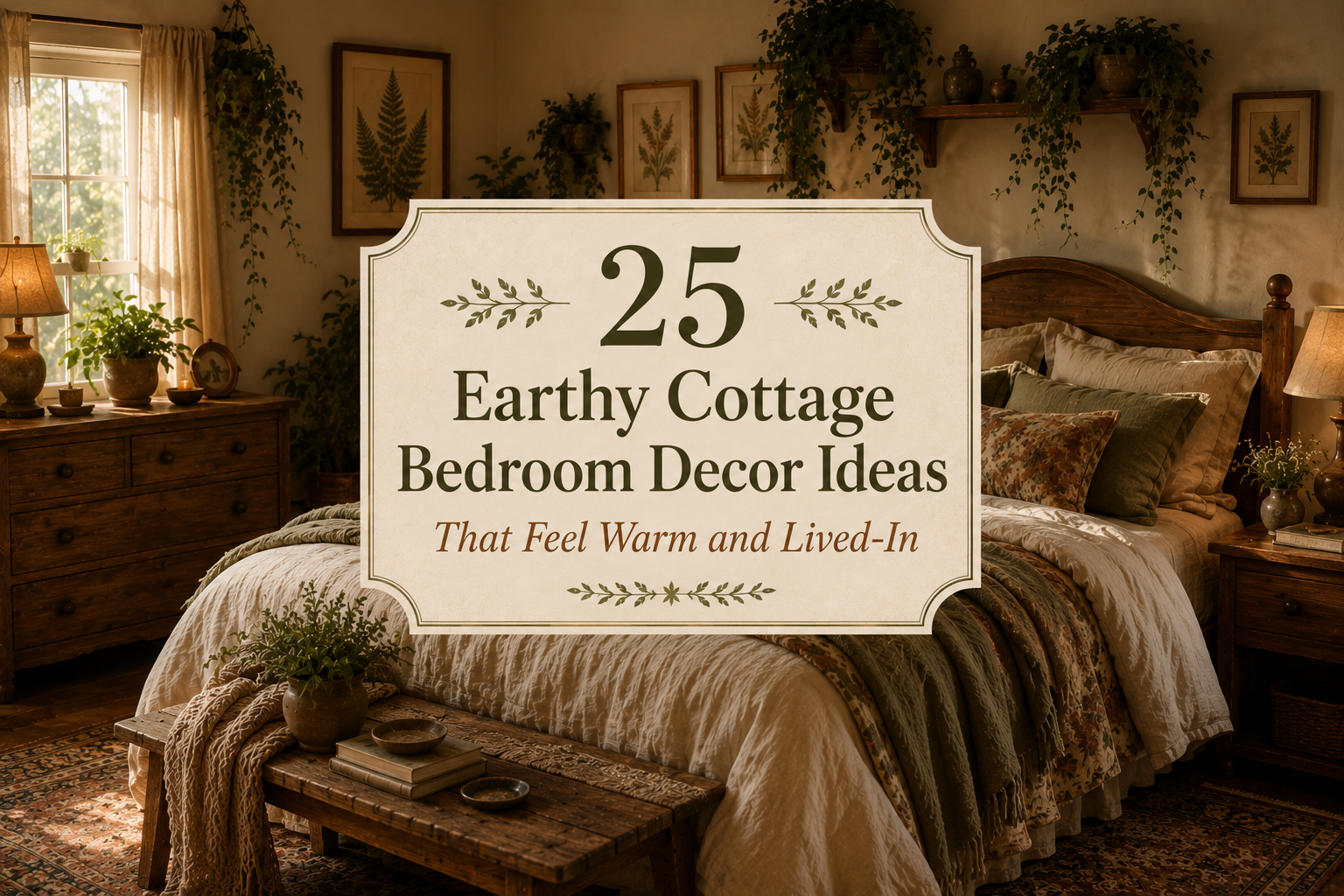
  • 25 Earthy Cottage Bedroom Decor Ideas That Feel Warm and Lived-In

    25 Earthy Cottage Bedroom Decor Ideas That Feel Warm and Lived-In

    An earthy cottage bedroom combines natural textures, muted color palettes, vintage details, and layered materials that make a space feel settled rather than overly styled. The look leans heavily on wood finishes, soft textiles, botanical accents, and practical furniture choices that create warmth without making the room feel crowded.

    These earthy bedroom ideas focus on decor choices that add texture, visual softness, and depth while still feeling functional for everyday use. From layered bedding and rustic wood tones to earthy decorations and soft lighting, each idea helps create a bedroom that feels calm, grounded, and comfortably lived-in.

    1. Layer Neutral Linen Bedding

    Neutral linen bedding instantly softens a cottage bedroom and creates the relaxed texture that defines earthy interiors. Shades like oatmeal, flax, ivory, and warm beige work especially well because they add dimension without relying on bold color contrast.

    Layering different linen textures also keeps the bed from looking flat. Pair a lightweight quilt with relaxed pillow covers and a loosely draped throw blanket for a more natural, collected look.

    Soft neutrals also help smaller or darker bedrooms feel brighter without losing warmth.

    2. Add Warm Wood Furniture

    Warm wood furniture creates visual grounding and gives an earthy cottage bedroom its lived-in character. Pieces with visible grain, slightly aged finishes, or medium-to-dark wood tones tend to feel more natural than polished modern surfaces.

    Bed frames, nightstands, and dressers in oak, walnut, or reclaimed pine add warmth even when the rest of the room stays minimal. Slight imperfections and texture in the wood help the room feel layered instead of overly coordinated.

    Medium and darker wood finishes help larger bedrooms feel more grounded and visually balanced.

    3. Use Soft Botanical Wall Art

    Botanical wall art is one of the easiest earthy decorations for adding cottage-inspired detail without overwhelming the room. Vintage floral prints, pressed botanical illustrations, and muted landscape artwork all reinforce the organic feel of the space.

    Instead of using one oversized piece, many earthy bedroom designs rely on smaller grouped frames with natural wood or antique brass finishes. The layered arrangement creates a more collected appearance.

    Using smaller grouped frames also gives compact bedrooms more flexibility as furniture placement changes over time.

    4. Incorporate Layered Area Rugs

    Layered rugs help cottage bedrooms feel softer and more textured while adding warmth underfoot. Natural fiber rugs like jute or sisal create a grounded base layer, while vintage-style rugs add pattern and color variation.

    Faded terracotta, olive, rust, and muted brown tones blend naturally into earthy bedroom palettes without drawing too much attention away from the furniture.

    Layered rugs are especially useful in larger bedrooms that need more visual separation around the bed area.

    5. Decorate With Hanging Greenery

    Trailing greenery softens hard lines and adds movement to an earthy cottage bedroom. Hanging plants near windows or shelves create vertical texture while helping the room feel more connected to natural materials.

    Pothos, ivy, and string-of-pearls plants are especially common because they drape naturally and require relatively simple care. Clay pots, woven baskets, and aged ceramic planters reinforce the earthy look.

    Placing greenery near windows keeps the room feeling natural while making plant care more manageable.

    6. Choose Warm Ambient Lighting

    Warm lighting changes the atmosphere of a cottage bedroom more than almost any other decor choice. Soft amber-toned bulbs, table lamps with linen shades, and wall sconces create a calmer and more relaxed environment.

    Instead of relying on a single overhead fixture, earthy bedroom designs usually layer multiple smaller light sources throughout the room. This creates softer shadows and prevents the space from feeling harsh.

    Multiple light sources help balance darker walls and heavier furniture so the room still feels relaxed at night.

    7. Mix Vintage and Rustic Furniture

    A combination of vintage and rustic furniture gives earthy cottage bedrooms more personality than fully matching furniture sets. Antique nightstands, weathered benches, or older dressers add variation that makes the room feel naturally collected over time.

    The contrast between worn wood, aged hardware, and soft textiles creates depth without relying on decorative clutter.

    Keeping the wood tones relatively consistent prevents mixed furniture pieces from feeling visually disconnected.

    8. Use Earth-Toned Throw Blankets

    Throw blankets in earthy shades help reinforce the warm palette while adding softness to the room. Rust, moss green, clay, chocolate brown, muted mustard, and taupe are commonly used because they blend naturally with cottage-inspired decor.

    Chunky knit textures, fringed edges, and relaxed draping help the room feel less structured and more comfortable.

    Extra layers feel especially useful in bedrooms with hard flooring or minimal upholstered furniture.

    9. Add Floral Cottage Bedding

    Soft floral bedding introduces pattern while keeping the room visually relaxed. Smaller floral prints in faded tones tend to feel more timeless than bright oversized patterns.

    Earthy cottage bedroom designs often pair floral bedding with neutral sheets and textured blankets so the room still feels balanced rather than heavily patterned.

    Smaller floral prints help plain bedrooms feel softer without making the space feel overly busy.

    10. Style Open Wood Shelving

    Open shelving creates space for layered earthy decorations like ceramics, stacked books, framed artwork, and small planters. Natural wood shelves feel warmer than painted shelving and blend more easily into cottage interiors.

    Keeping shelves slightly imperfect and loosely styled helps maintain the relaxed appearance common in earthy bedroom designs.

    Leaving some negative space around open shelves helps the room maintain a calmer and less cluttered appearance.

    11. Use Soft Sage Green Accents

    Sage green is one of the most common colors in earthy cottage bedrooms because it adds color while still feeling muted and natural. It works well through bedding, curtains, painted furniture, or accent pillows.

    The softness of sage pairs naturally with cream, beige, terracotta, and medium wood tones.

    Sage green adds variation to neutral bedrooms without overpowering softer earthy tones.

    12. Add Woven Baskets for Storage

    Woven baskets bring texture into the room while providing practical storage for blankets, books, or extra pillows. Natural materials like wicker, rattan, and seagrass reinforce the organic feel of an earthy bedroom.

    Larger floor baskets also help soften corners and empty spaces that might otherwise feel unfinished.

    Woven storage works especially well in smaller bedrooms where everyday items still need to feel visually cohesive.

    13. Incorporate Distressed Wood Frames

    Distressed wood frames help wall art feel more integrated into a cottage bedroom instead of appearing overly polished. Slightly weathered finishes create texture and support the relaxed, lived-in atmosphere.

    Gallery walls with mismatched frame sizes often feel more natural than perfectly symmetrical layouts.

    Weathered frames pair naturally with vintage artwork and help the room feel more layered over time.

    14. Hang Soft Neutral Curtains

    Curtains in linen, cotton, or gauzy fabrics soften the room while filtering natural light. Warm white, oatmeal, beige, and muted olive curtains help maintain the earthy palette without making the room feel heavy.

    Long curtains hung slightly above the window frame can also make cottage bedrooms appear taller and more open.

    Airier curtain fabrics help smaller bedrooms maintain softness without blocking too much natural light.

    15. Use Antique Brass Hardware

    Antique brass hardware adds warmth and subtle contrast to dressers, nightstands, and wardrobes. The softer finish feels more natural in cottage interiors than highly reflective chrome or black hardware.

    Even small updates like drawer pulls or bedside lamp bases can shift the overall tone of the room toward a warmer earthy look.

    Warmer metal finishes blend more naturally with medium and darker wood tones commonly used in cottage interiors.

    16. Add a Rustic Wooden Bench

    A rustic bench at the foot of the bed creates additional texture while making the bedroom feel more layered. Reclaimed wood benches with visible imperfections fit naturally into earthy cottage interiors.

    Benches can also be styled with folded blankets, baskets, or decorative pillows to make the room feel more complete.

    Leaving enough space around the bench keeps the room functional and prevents the layout from feeling crowded.

    17. Create Texture With Layered Pillows

    Layered pillows help cottage bedrooms feel softer and more dimensional. Combining linen, woven, velvet, and knit textures creates variation without requiring strong color contrast.

    Earthy bedroom palettes often keep pillow colors muted so the texture becomes the focal point instead of bright patterns.

    Layered pillow textures keep neutral bedrooms from feeling visually flat or overly minimal.

    18. Use Vintage-Inspired Lamps

    Vintage-inspired lamps add warmth and help reinforce the relaxed cottage atmosphere. Ceramic lamp bases, pleated shades, and slightly aged finishes work particularly well in earthy bedroom designs.

    Bedside lighting with softer shapes prevents the room from feeling too sharp or modern.

    Softer bedside lighting creates a calmer atmosphere in rooms where overhead fixtures feel too bright at night.

    19. Decorate With Dried Flowers

    Dried flowers add subtle organic texture that complements earthy decorations without requiring constant maintenance. Neutral grasses, eucalyptus, lavender, and dried wildflowers all work naturally in cottage-style spaces.

    Simple ceramic or glass vases help keep arrangements understated and relaxed.

    Dried arrangements work well in bedrooms where natural light is too limited for live plants.

    20. Incorporate Exposed Wood Beams

    Exposed wood beams instantly add rustic structure and visual warmth to an earthy cottage bedroom. Natural wood ceilings or decorative beams create contrast against lighter walls and soft bedding.

    Even faux beams can help establish the architectural texture often seen in cottage-inspired interiors.

    Exposed beams feel most balanced in bedrooms with enough ceiling height to support the added visual weight.

    21. Choose Soft Earthy Paint Colors

    Wall colors in muted earth tones help establish the calm foundation common in earthy bedroom designs. Warm beige, olive green, clay, taupe, mushroom, and dusty terracotta are frequently used because they feel grounded without becoming overly dark.

    Matte finishes tend to look softer and more natural than glossy paint finishes in cottage interiors.

    Earth-toned paint colors help minimally decorated bedrooms still feel warm and layered.

    22. Add Layered Quilts and Coverlets

    Layering quilts and coverlets gives the bed a relaxed cottage appearance while adding softness and texture. Slightly wrinkled fabrics and faded stitching help the room feel less formal.

    Neutral quilts mixed with subtle floral or striped patterns create visual depth while staying cohesive with earthy bedroom palettes.

    Extra bedding layers make the room feel noticeably warmer during colder seasons without requiring heavier furniture.

    23. Style a Small Reading Corner

    A small reading corner adds function while reinforcing the relaxed atmosphere of an earthy cottage bedroom. Upholstered chairs, vintage stools, or simple wooden benches paired with a soft throw blanket create a comfortable secondary seating area.

    Adding a floor lamp and small side table helps the space feel intentional without requiring excessive decor.

    Placing a reading area near a window helps the space feel intentional without needing additional lighting during the day.

    24. Incorporate Handmade Ceramics

    Handmade ceramics introduce natural variation and imperfect texture into the room. Matte finishes, uneven edges, and earthy glaze colors feel more authentic than highly polished decorative pieces.

    Ceramic vases, bowls, and candle holders help add smaller layered details throughout the space.

    Handmade ceramics add texture to simpler bedrooms without introducing unnecessary color contrast.

    25. Keep the Styling Relaxed and Unstructured

    One of the defining features of an earthy cottage bedroom is that it never feels overly staged. Slightly rumpled bedding, loosely arranged pillows, layered textures, and collected decor create a softer and more natural appearance.

    The goal is not perfect symmetry but a room that feels comfortable, warm, and realistically lived-in.

    Relaxed styling feels more natural when layered textures and organic materials already provide enough visual interest.

    An earthy cottage bedroom feels most successful when natural textures, warm tones, and practical furniture choices work together instead of competing for attention. Layered bedding, rustic wood finishes, earthy decorations, and soft lighting all contribute to a bedroom that feels grounded, functional, and visually calm without appearing overly designed.

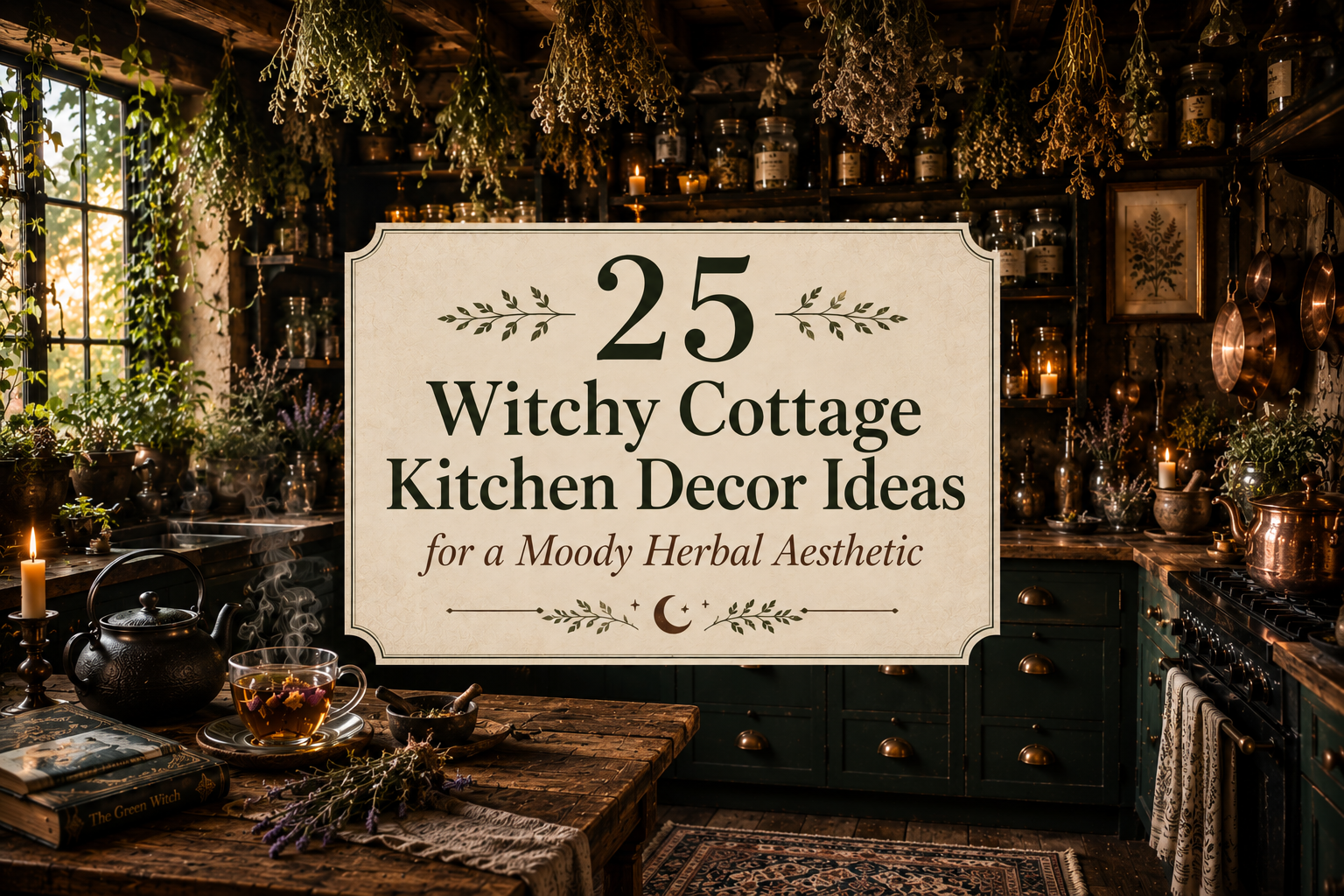
  • 25 Witchy Cottage Kitchen Decor Ideas for a Moody Herbal Aesthetic

    25 Witchy Cottage Kitchen Decor Ideas for a Moody Herbal Aesthetic

    A witchy cottage kitchen combines layered textures, natural materials, and intentional clutter to create a space that feels grounded and lived-in. Rooted in witchy cottage kitchen styling, this approach overlaps naturally with witchy home decor and witchy decorations by focusing on herbs, dark tones, and functional displays. The result is a kitchen that balances utility with atmosphere, where every object contributes to both storage and visual weight.

    1. Open Shelving with Herbal Storage

    Replace upper cabinets with open wood shelving and fill them with jars of dried herbs, teas, and spices. Glass containers and labeled apothecary jars create both visibility and structure, which works best when there’s enough wall space to support a fuller, layered look without crowding.

    2. Dark Wood Cabinets

    Deep-stained or painted cabinets in tones like forest green, black, or espresso establish the moody base typical of witchy home decor, while matte finishes keep surfaces from reflecting too much light in darker palettes, making them more suitable in kitchens with decent natural light.

    3. Hanging Dried Herbs and Florals

    Bundles of lavender, rosemary, and wildflowers hung from beams or racks add texture overhead and reinforce the herbal focus while softening hard lines, especially effective in spaces with exposed beams or ceiling hooks that can handle suspended elements.

    4. Vintage Copper Cookware Display

    Copper pots and pans hung on walls or racks introduce warmth and reflective contrast against darker surfaces, and their natural patina develops over time, making them practical in kitchens where cookware is used frequently and stays within reach.

    5. Apothecary-Style Storage

    Use small drawers, labeled bottles, and compartment trays to organize spices and small tools, creating visual complexity without clutter, which becomes especially useful when cabinet space is limited and everything needs to stay accessible.

    6. Stone or Butcher Block Countertops

    Natural surfaces like wood or stone add weight and texture while grounding lighter decorative elements, and minor imperfections only add to the look, making them a strong choice for kitchens that see regular cooking and prep work.

    7. Candle Clusters for Ambient Lighting

    Grouping taper or pillar candles at varying heights introduces softer lighting layers that contrast overhead fixtures, helping define mood in kitchens that already have functional lighting in place.

    8. Layered Rugs with Vintage Patterns

    Patterned rugs placed in work zones bring warmth and visual variation while softening hard flooring underfoot, making them especially practical in kitchens where standing for long periods is common.

    9. Glass Jar Pantry Displays

    Clear jars for grains, flour, and dry goods keep ingredients visible while doubling as decor, and a consistent container style helps maintain order in kitchens where pantry items are accessed daily.

    10. Dark Painted Walls

    Charcoal, olive, or muted plum walls create a deeper backdrop that allows lighter objects and metals to stand out, which works best when balanced with natural light or multiple light sources to avoid a closed-in feel.

    11. Antique or Vintage Furniture Pieces

    Freestanding hutches, sideboards, or tables bring variation to built-in-heavy kitchens while adding age and character, making them easier to incorporate in layouts that aren’t tightly fixed.

    12. Botanical Wall Art

    Illustrations of herbs, plants, or fungi reinforce the theme without adding physical clutter, and they tend to work well in areas where wall space needs visual structure without adding bulk.

    13. Iron or Wooden Hanging Racks

    Mounted racks for utensils, pots, or herbs keep frequently used items accessible while adding material contrast, which becomes especially helpful when counter space is limited.

    14. Layered Greenery and Potted Plants

    Clusters of plants in varying heights and textures bring movement into the space, particularly effective in kitchens that receive enough natural light to support live greenery.

    15. Distressed Wood Accents

    Cutting boards, stools, and trays with visible wear and grain reinforce the rustic foundation of witchy decorations, making them a natural fit when everyday tools are left out in the open.

    16. Moody Backsplash Choices

    Backsplashes in deep tones or natural stone introduce subtle pattern without overwhelming the space, especially in kitchens where the backsplash covers a larger surface area.

    17. Witchy Decorative Objects

    Items like mortar and pestles, glass bottles, or aged books add thematic detail when grouped intentionally, working best when kept minimal to avoid clutter.

    18. Mixed Metal Finishes

    Combining brass, copper, and iron instead of matching finishes creates depth and variation, which is easier to achieve in kitchens where hardware and fixtures can be layered over time.

    19. Soft Linen Textiles

    Curtains, towels, and table coverings in muted, natural fabrics soften heavier materials and darker tones, making them especially useful in kitchens that lean heavily on wood and stone.

    20. Warm, Low Lighting Fixtures

    Pendant lights or sconces with warm bulbs help maintain a consistent glow that supports the overall mood, particularly in kitchens used frequently during evening hours.

    21. Rustic Open Pantry Areas

    Open pantry shelving or alcoves keep food storage visible and accessible while contributing to the layered look, making them more practical in kitchens with space to dedicate to pantry zones.

    22. Layered Shelf Styling

    Mixing functional items with decorative pieces across shelves creates variation in height and texture without rigid symmetry, which works best when shelving is a central visual feature.

    23. Earth-Toned Color Accents

    Muted greens, browns, and deep reds introduced through smaller items help tie the palette together without overwhelming the base, especially in kitchens that already lean neutral or dark.

    24. Handcrafted Ceramics

    Handmade dishes with slight irregularities add texture and authenticity while doubling as display pieces, making them particularly effective when stored on open shelving.

    25. Subtle Seasonal Elements

    Rotating herbs, dried florals, or small accents keeps the space feeling current without changing the overall setup, which is easiest to maintain in kitchens where decor swaps need to stay simple.

  • 30 Dark Academia Bedroom Ideas With Moody Vintage Style

    30 Dark Academia Bedroom Ideas With Moody Vintage Style

    A dark academia bedroom combines vintage furniture, layered textures, rich colors, and traditional decor to create a space that feels quiet, grounded, and collected over time. The strongest dark academia aesthetic interiors rely less on themed decorations and more on contrast between dark finishes, warm lighting, and classic materials. These dark academia room ideas focus on creating atmosphere while still making the bedroom feel practical and comfortable enough for daily use.

    1. Use Deep Green or Charcoal Walls

    Dark wall colors create the foundation for a dark academia bedroom because they immediately add depth and visual weight. Forest green, charcoal, espresso brown, and muted black tones work especially well with vintage wood furniture and warm lighting. Matte finishes usually feel softer and more natural than glossy paint, especially once layered textiles and framed artwork are added to the room. Bedrooms with decent natural light tend to handle darker paint much better without feeling visually closed in.

    2. Choose Antique or Traditional Wood Furniture

    Classic wood bed frames, carved dressers, and vintage nightstands help establish the academic and historical feel associated with the dark academia aesthetic. Walnut, mahogany, and dark oak finishes appear most often because they add richness without looking overly polished or modern. Furniture with heavier proportions also helps anchor darker wall colors so the room feels balanced instead of top-heavy.

    3. Add Layered Rugs With Vintage Patterns

    Persian-style rugs and faded vintage runners soften dark interiors while adding warmth underfoot. Layering rugs creates a collected look that fits naturally into a dark academia room, especially alongside wood flooring and heavier bedding. Rich reds, muted greens, navy, and warm brown tones tend to blend best with darker palettes while still adding contrast. This kind of layered flooring also helps larger bedrooms feel less empty and visually cold.

    4. Style Open Bookshelves With Decor and Books

    Bookshelves are one of the most recognizable elements of a dark academia bedroom. Mixing books with framed art, candles, bust sculptures, and small antique objects keeps shelves from looking overly staged. Dark wood shelving generally blends more naturally into moody interiors than bright white finishes, particularly when the room already contains warm wood furniture. Tall shelving works especially well in rooms with unused vertical wall space that would otherwise feel bare.

    5. Use Warm Ambient Lighting Instead of Bright Overhead Lights

    Warm lamps, wall sconces, and candle-style lighting create the softer atmosphere commonly associated with dark academia interiors. Amber-toned bulbs reduce harsh shadows and make darker paint colors appear richer at night. Table lamps with fabric shades usually feel more consistent with vintage styling than exposed modern bulbs, especially when several smaller light sources are spread throughout the room instead of relying on a single ceiling fixture.

    6. Incorporate Velvet or Heavy Linen Bedding

    Textured bedding adds softness against darker walls and wood furniture. Velvet quilts, linen duvets, plaid throws, and heavier blankets all contribute to the layered appearance commonly seen in dark academia aesthetic bedrooms. Deep olive, rust, cream, burgundy, and charcoal tones pair naturally with vintage-inspired decor while helping the bed feel visually substantial within the room. Heavier fabrics also tend to make darker interiors feel warmer during colder months.

    7. Create a Gallery Wall With Vintage Frames

    Gallery walls featuring antique-style frames, botanical sketches, portraits, and academic artwork reinforce the scholarly tone of the space without feeling overly decorative. Mixing frame sizes and finishes keeps the arrangement from looking too symmetrical or modern. Dark wood and brass frames generally integrate best with moody interiors because they echo the warmer finishes already used throughout the room. Larger blank walls benefit from this approach because it adds visual interest without taking up additional floor space.

    8. Add Floor-Length Curtains in Heavy Fabrics

    Long curtains in velvet, linen, or blackout fabrics help frame windows while softening the room visually. Deep olive, brown, charcoal, and muted plaid patterns fit naturally within dark academia room styling while complementing vintage furniture and darker paint colors. Hanging curtains slightly higher than the window frame can also make ceilings appear taller and more dramatic. Heavier curtains are especially useful in bedrooms where controlling light improves both sleep quality and overall atmosphere.

    9. Use Brass or Aged Metal Accents

    Brass picture frames, vintage lamps, drawer pulls, and candleholders add contrast against dark woods and matte paint colors. Slightly aged or brushed finishes usually feel more authentic to the dark academia aesthetic than polished chrome or high-shine metallics. Repeating small metal accents throughout the room creates a more cohesive look than concentrating everything in one area.

    10. Include a Writing Desk or Reading Corner

    A small writing desk, upholstered chair, or reading nook reinforces the academic influence behind the style. Vintage desks with darker finishes pair naturally with stacked books, table lamps, and framed artwork without making the space feel overly themed. Even smaller bedrooms can usually accommodate a compact reading setup when furniture proportions stay relatively simple and narrow.

    11. Mix Plaid and Traditional Textile Patterns

    Plaid blankets, striped pillows, and tapestry-inspired fabrics create visual layering without relying on bright colors. Traditional textile patterns help dark academia bedrooms feel lived-in and collected rather than overly coordinated. Keeping the overall palette muted prevents multiple patterns from competing too heavily with darker walls and furniture.

    12. Display Candlesticks and Vintage-Inspired Lighting

    Taper candles, candelabras, and lantern-style fixtures contribute to the warm atmosphere commonly associated with dark academia interiors. Battery-operated candles can create a similar look without the maintenance concerns of open flames, especially when grouped with books and framed artwork on shelves or dressers. Smaller decorative light sources usually create a softer mood in darker bedrooms than oversized overhead fixtures.

    13. Use Dark Wood Paneling or Trim

    Wood wall paneling, ceiling beams, or darker trim instantly add architectural depth to a dark academia room. Even partial paneling behind the bed can make the space feel more established and traditional without requiring a full renovation. Rooms with minimal architectural detail often benefit the most because darker trim creates stronger contrast and definition.

    14. Incorporate Botanical Prints and Nature Elements

    Pressed flowers, botanical sketches, ivy, and dried branches soften heavier furniture and darker color palettes. Botanical artwork appears frequently in dark academia aesthetic interiors because it balances the scholarly influence with something more organic and understated. A few natural elements also help darker rooms feel less visually dense once multiple textures and darker finishes are layered together.

    15. Style a Bed With Multiple Layered Pillows

    Layered pillows in velvet, linen, or tapestry fabrics make the bed feel fuller and more grounded within a dark academia bedroom. Mixing textures usually creates more depth than relying on multiple colors, particularly when the room already contains dark paint and heavy furniture. In smaller bedrooms, this also helps the bed function as a stronger focal point without needing additional decor.

    16. Add Vintage Mirrors With Ornate Frames

    Large vintage mirrors reflect light while reinforcing the traditional styling associated with dark academia interiors. Gold, brass, and dark wood frames integrate naturally with moody color palettes while adding contrast against darker walls. The additional reflected light helps keep darker bedrooms from feeling overly enclosed during the day.

    17. Use Wallpaper With Traditional Patterns

    Moody floral wallpaper, damask prints, and vintage botanical patterns can create a stronger sense of atmosphere than plain painted walls alone. Dark wallpaper designs usually work best when limited to a single accent wall behind the bed so the room still feels balanced. Simpler bedding and furniture choices help prevent heavily patterned walls from overwhelming smaller spaces.

    18. Stack Books Throughout the Room

    Books stacked on nightstands, desks, and shelves reinforce the intellectual and collected feeling behind dark academia room design. Older hardcovers and neutral-toned spines blend most naturally into darker interiors while adding texture at different heights throughout the space. Distributing books across multiple surfaces keeps shelves from feeling overcrowded.

    19. Choose Warm Wood Flooring or Vintage Rugs

    Dark academia bedrooms often rely on warm wood tones underfoot to balance cooler wall colors and darker textiles. Vintage rugs can soften modern flooring while helping the room feel older and more layered without requiring permanent changes. Warmer flooring materials also prevent darker interiors from leaning too industrial or stark.

    20. Add Framed Oil Paintings or Classical Art

    Traditional artwork reinforces the historic and academic influence behind the dark academia aesthetic. Portraits, landscapes, and still-life paintings in darker tones integrate naturally with moody interiors while helping walls feel more finished and intentional. Larger artwork pieces tend to work best above dressers or beds where they visually anchor heavier furniture.

    21. Use Canopy or Four-Poster Beds

    Canopy beds and four-poster frames create a dramatic focal point that aligns naturally with dark academia styling. Dark wood finishes and traditional silhouettes pair well with layered bedding, vintage rugs, and warmer lighting throughout the room. Bedrooms with higher ceilings generally accommodate these larger furniture pieces more comfortably without feeling crowded.

    22. Include Leather Accents

    Leather chairs, benches, or bound books add another layer of texture while complementing wood furniture and darker color palettes. Distressed finishes usually feel more consistent with vintage-inspired interiors than smoother modern leather surfaces. Durable materials like leather also tend to age better in frequently used spaces where softer fabrics wear down faster.

    23. Keep Decor Collected Rather Than Minimal

    Dark academia bedrooms typically feel curated over time instead of sparsely decorated. Layering framed art, books, textiles, and vintage objects creates depth without relying on bright colors or oversized statement pieces. Varying the height and texture of decorative objects helps the room feel more natural and less rigidly styled.

    24. Add Moody Green or Burgundy Bedding

    Dark green, burgundy, charcoal, and deep brown bedding consistently appear throughout dark academia room inspiration because they reinforce the room’s overall warmth and richness. Neutral sheets underneath help balance darker top layers while preventing the bed from feeling visually too heavy. Richer bedding colors also tend to conceal wear and daily use more easily than lighter fabrics.

    25. Use Vintage Trunks or Storage Benches

    Storage trunks and upholstered benches add function while reinforcing the old-world atmosphere associated with the dark academia aesthetic. Vintage-inspired luggage pieces work especially well for storing blankets, books, or seasonal decor while still contributing to the room’s visual style. Multi-purpose furniture becomes much more useful in smaller bedrooms where extra storage space is limited.

    26. Incorporate Wall Sconces Beside the Bed

    Wall sconces create softer bedside lighting while freeing up space on nightstands. Brass, bronze, and candle-style fixtures fit naturally into dark academia interiors because they blend easily with warmer woods and vintage decor. Mounted lighting is particularly helpful in compact bedrooms where surface space disappears quickly.

    27. Add Ceiling Beams or Wood Ceiling Details

    Wood ceiling details introduce warmth and architectural contrast against darker walls. Even faux beams can create a more established appearance within a dark academia bedroom, especially when paired with vintage furniture and layered textiles below. Rooms with higher ceilings usually benefit most because the additional detail helps balance the vertical space.

    28. Use Dark Floral Arrangements and Dried Greenery

    Dried eucalyptus, dark florals, and muted greenery soften darker interiors without introducing bright or overly seasonal colors. Vintage-style vases and aged ceramic containers help these arrangements feel more integrated with the rest of the decor instead of standing out as decorative accents. Dried greenery also requires far less upkeep in lower-light bedrooms.

    29. Mix Gothic and Traditional Decor Carefully

    Arched mirrors, candleholders, darker artwork, and antique-inspired decor can introduce subtle gothic influence without overwhelming the room. The strongest dark academia aesthetic interiors usually balance dramatic details with simpler furniture and traditional materials so the space still feels livable. Too many heavily themed pieces can make smaller bedrooms feel visually cluttered very quickly.

    30. Keep the Color Palette Muted and Consistent

    Dark academia bedrooms feel most cohesive when the palette stays centered around earthy neutrals, deep greens, charcoal, brown, burgundy, and warm cream tones. Consistency between furniture, textiles, and wall colors helps layered decor feel intentional rather than random. A restrained palette also makes it easier to incorporate vintage pieces over time without disrupting the overall atmosphere.

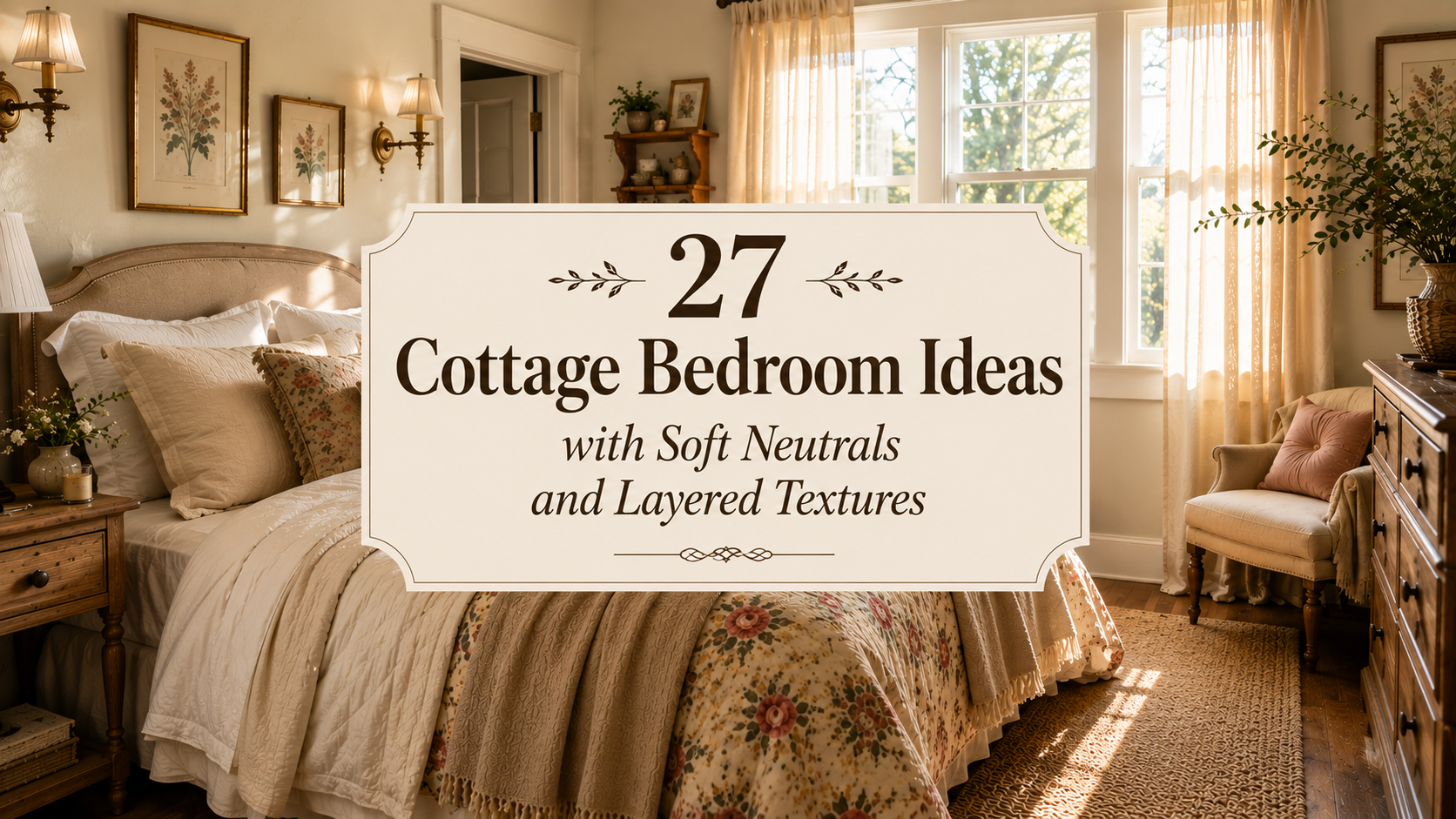
  • 27 Cottage Bedroom Ideas with Soft Neutrals and Layered Textures

    27 Cottage Bedroom Ideas with Soft Neutrals and Layered Textures

    A cottage bedroom feels most inviting when the space looks layered, relaxed, and gently lived in rather than perfectly coordinated. Soft neutrals, natural materials, floral fabrics, and warm wood tones all work together to create a bedroom that feels calm without becoming flat or minimal. The best cottage decoration relies less on bold statement pieces and more on texture, softness, and subtle contrast that makes the room feel collected over time.

    These cottage style ideas focus on practical ways to build warmth and depth through bedding, lighting, furniture, and layered textiles while keeping the overall space light and comfortable.

    1. Layer Cream and Beige Bedding

    Start with crisp white sheets, then build warmth with oatmeal linen duvets, quilted blankets, and soft knit throws in slightly varied neutral tones. The subtle shifts in texture keep the bed from feeling one-dimensional while still maintaining the quiet, airy look that defines a cottage bedroom, especially in smaller spaces where darker bedding can feel visually heavy.

    2. Use Floral Quilts in Faded Tones

    Soft floral quilts in washed sage, dusty rose, muted blue, or faded taupe instantly add cottage character without overwhelming the room. Slightly sun-faded prints tend to feel more timeless and relaxed than bright modern florals, particularly when paired with neutral bedding and simple painted furniture that lets the pattern breathe naturally.

    3. Add Warm Wood Nightstands

    Natural wood nightstands with visible grain, aged finishes, or gently worn edges help ground soft neutral bedrooms and add warmth that painted furniture alone sometimes lacks. Medium oak and warm pine tones usually create a softer balance than heavily distressed white finishes, especially in rooms that receive limited natural light during the day.

    4. Choose Soft Linen Curtains

    Lightweight linen curtains in warm white, flax, or pale beige soften incoming light and create an easy, breezy movement around the windows. Hanging the curtains slightly above the frame also helps draw the eye upward, which makes standard-height bedrooms feel a little more open and airy without requiring major changes to the room itself.

    5. Style the Bed with Relaxed Layered Pillows

    Layer euro shams, standard pillows, and a few smaller accent cushions in mixed fabrics like washed linen, cotton, and quilted textures for a bed that feels soft rather than overly polished. Keeping the palette neutral prevents the arrangement from looking too formal, which makes the space easier to maintain in everyday bedrooms that need to feel comfortable first.

    6. Bring in Antique Brass Accents

    Warm brass lamps, drawer pulls, curtain rods, and picture frames add quiet contrast against soft neutral bedding and pale painted walls. Slightly aged finishes feel especially natural within cottage decoration because they introduce warmth without relying on darker colors that can sometimes weigh down smaller bedrooms.

    7. Use a Soft Neutral Area Rug

    A large neutral rug beneath the bed helps anchor the entire room while adding warmth and softness underfoot on wood or laminate floors. Faded patterns and low-contrast designs usually feel more relaxed than sharp geometric prints, particularly in cottage style spaces where layered texture matters more than strong visual contrast.

    8. Incorporate Cream Painted Furniture

    Cream-painted dressers, bedside tables, and bed frames brighten the room while reflecting natural light in a softer way than stark bright white finishes. Pairing painted furniture with woven textures or warm wood accents keeps the space from feeling too flat, especially in bedrooms that already rely heavily on neutral tones.

    9. Add Botanical Wall Art

    Vintage-inspired botanical sketches, pressed floral prints, and soft countryside landscapes help reinforce the calm, collected feel of a cottage bedroom without overpowering the walls. Smaller framed groupings often work better than oversized statement pieces in narrow bedrooms where too much visual weight can make the room feel crowded.

    10. Layer Neutral Throws Across the Bed

    Fold lightweight throws across the foot of the bed or casually drape them over a reading chair to add softness and subtle texture variation throughout the room. Mixing gauzy cotton, washed linen, and chunky knit fabrics creates a more relaxed look while also making it easier to adjust warmth throughout different seasons.

    11. Install Warm Wall Sconces

    Wall sconces beside the bed create a softer and more intimate glow than overhead lighting alone while freeing up valuable surface space on smaller nightstands. Fabric shades help diffuse the light gently, which works especially well in compact cottage bedrooms where harsh lighting can make the room feel less inviting at night.

    12. Mix Floral and Gingham Patterns

    Combining muted gingham with faded floral prints creates the layered charm cottage style is known for without making the room feel overly busy. Keeping both patterns soft and understated allows them to blend naturally together, which tends to work better in smaller bedrooms where strong contrast can quickly overwhelm the space.

    13. Use Woven Baskets for Storage

    Wicker, seagrass, and rattan baskets bring natural texture into the room while giving extra blankets, books, and pillows a place to disappear neatly. Open woven storage feels visually lighter than solid bins or plastic containers, which helps maintain the relaxed and airy atmosphere that cottage bedrooms depend on.

    14. Choose a Soft Upholstered Headboard

    Neutral upholstered headboards in linen or cotton instantly soften the room and create a comfortable backdrop against layered bedding. Light textured fabrics feel more natural in cottage style spaces than velvet or glossy finishes, particularly when the surrounding furniture already includes heavier wood tones.

    15. Add Fresh or Dried Greenery

    Simple greenery arrangements bring life into a neutral cottage bedroom without interrupting the soft color palette. Olive branches, eucalyptus stems, and dried hydrangeas all add gentle texture while requiring far less maintenance than delicate fresh flowers in lower-light bedrooms.

    16. Keep the Color Palette Warm and Muted

    Warm whites, soft taupes, dusty sage, pale mushroom, and muted beige tones create a calm atmosphere while still giving the room enough variation to feel layered. Restricting the palette also makes it easier to mix different fabrics and furniture finishes without the room starting to feel visually cluttered.

    17. Layer Bedding with Mixed Fabrics

    Combining washed cotton sheets, linen duvets, quilted coverlets, and knit throws gives the bed a relaxed, lived-in softness that feels central to cottage decoration. The variation in fabric texture becomes especially important in neutral bedrooms where depth needs to come from materials rather than bold color contrasts.

    18. Create a Small Reading Corner

    A compact upholstered chair, soft lamp, and small wooden side table can turn an unused corner into a cozy reading spot without requiring much space. Keeping the furniture visually lightweight helps the room stay open, which matters more in bedrooms where every piece needs to earn its place.

    19. Use Wallpaper on One Accent Wall

    Soft floral or botanical wallpaper behind the bed introduces pattern and personality while still keeping the room balanced and calm. Limiting wallpaper to a single wall prevents the space from feeling overly busy, especially in cottage bedrooms that already include layered bedding and textured fabrics.

    20. Choose Simple Wood Bed Frames

    Wood bed frames with spindle details, curved silhouettes, or lightly weathered finishes add character without becoming too ornate. Simpler shapes tend to age better visually over time, particularly in cottage style rooms where the goal is warmth and comfort rather than heavy decoration.

    21. Layer Sheer Curtains with Linen Panels

    Pairing sheer curtains behind heavier linen drapes creates softness around the windows while filtering daylight more gently throughout the room. This layered approach works especially well in bedrooms that need additional privacy but still benefit from natural morning light.

    22. Add Soft Ambient Lighting

    Table lamps with warm bulbs, wall sconces, and subtle accent lighting create a calmer atmosphere than relying entirely on a bright ceiling fixture. Layered lighting becomes even more important during colder months when bedrooms naturally receive less daylight and can start to feel flat by evening.

    23. Use Neutral Bedding with Subtle Patterns

    Thin stripes, faded florals, stitched detailing, and soft ticking patterns add quiet variation without interrupting the calm neutral palette. Low-contrast designs also tend to blend more naturally with seasonal decor changes, which makes the room easier to update over time without replacing larger pieces.

    24. Incorporate Rustic Ceiling Beams

    Wood ceiling beams instantly add warmth and architectural texture to cottage bedrooms, even when the rest of the room stays soft and minimal. Natural wood overhead also helps balance pale walls and bedding, particularly in bedrooms that might otherwise feel visually lightweight from floor to ceiling.

    25. Style Open Shelves with Restraint

    A few stacked books, ceramic vases, framed artwork, and small greenery arrangements create interest without making the room feel cluttered. Leaving visible empty space between objects helps open shelving feel calmer and more intentional, especially in smaller bedrooms where too much decor can quickly overwhelm the walls.

    26. Use Soft Painted Wall Colors

    Warm white, pale sage, soft mushroom, and muted cream walls create a gentler backdrop than stark bright white paint while allowing layered textiles to stand out naturally. Slightly muted wall colors also tend to soften shadows and imperfections better in older homes with uneven light.

    27. Balance the Room with Natural Textures

    Linen bedding, woven baskets, wood furniture, ceramic decor, and cotton curtains all help cottage style bedrooms feel grounded and relaxed instead of overly polished. Natural textures are often what give neutral spaces their warmth, particularly in bedrooms where the color palette stays intentionally soft and understated.

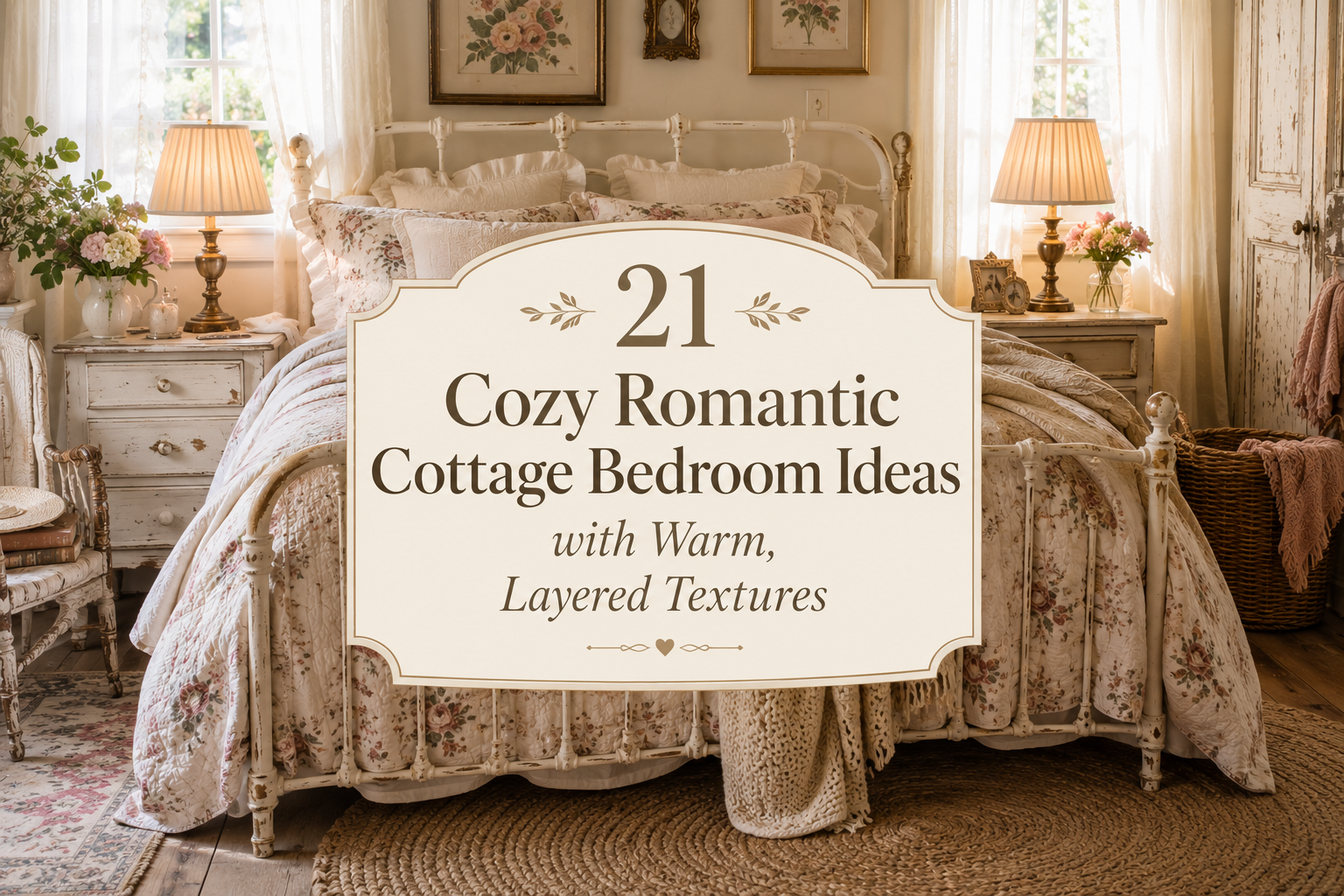
  • 21 Cozy Romantic Cottage Bedroom Ideas with Warm, Layered Textures

    21 Cozy Romantic Cottage Bedroom Ideas with Warm, Layered Textures

    A romantic cottage bedroom blends softness, age-worn detail, and layered materials to create a space that feels settled and cohesive. These romantic bedroom ideas focus on texture, light, and subtle contrast, all grounded in cottage style principles that favor comfort over precision. Each approach below highlights a distinct way to build warmth and depth without losing the relaxed structure that defines this look.

    1. Layered White Bedding with Mixed Textures

    Start with a white or off-white base and build upward using quilts, coverlets, and soft throws in varying weights and weaves. The contrast between linen, cotton, and knit materials creates dimension without relying on color, which helps maintain visual lightness in smaller rooms.

    2. Floral Prints in Muted Tones

    Incorporate floral patterns through bedding, curtains, or accent pillows, keeping the palette soft and slightly faded. Avoid high-contrast prints in favor of designs that blend into the overall scheme, especially in spaces with strong natural light where bold patterns can feel overpowering.

    3. Distressed Wood Furniture

    Use dressers, nightstands, or bed frames with visible wear, chipped paint, or patina to anchor the room in cottage style. These pieces add age and structure to otherwise soft surroundings, which helps balance rooms that lean heavily on light fabrics.

    4. Sheer Curtains for Diffused Light

    Hang sheer or semi-sheer curtains to filter natural light and soften the edges of the room. Light diffusion enhances the romantic quality without adding visual weight, making it easier to manage brightness in rooms with larger windows.

    5. Iron Bed Frames with Curved Lines

    Choose an iron bed frame with gentle curves or simple scrollwork to introduce structure without heaviness. Painted finishes in white or soft neutrals maintain cohesion, which works well when the bed needs to stand out without dominating the room.

    6. Layered Rugs for Warmth

    Place a smaller patterned rug over a larger neutral base to build texture underfoot. This adds warmth and visual layering without requiring permanent flooring changes, which is useful in bedrooms with hard surfaces that can feel cold or echo-prone.

    7. Vintage-Inspired Lighting Fixtures

    Use table lamps or wall sconces with fabric shades, aged brass, or ceramic bases. Lighting should feel ambient rather than directional, creating a softer atmosphere that suits bedrooms used for winding down rather than task-focused activities.

    8. Soft Neutral Color Palette

    Stick to creams, warm whites, pale taupes, and muted pastels to maintain cohesion. Subtle shifts in tone create depth without strong contrast, which keeps the room feeling open while still visually layered.

    9. Ruffled or Pleated Textiles

    Incorporate ruffles or pleats in bedding, pillowcases, or curtains to introduce movement and softness. These details work best when used sparingly so the room doesn’t feel overly decorative or visually crowded.

    10. Antique or Vintage Accents

    Add small decorative items such as framed prints, ceramic pitchers, or aged mirrors. These pieces reinforce the lived-in quality central to cottage style, particularly in rooms with enough surface space to display them without clutter.

    11. Upholstered Headboards in Soft Fabrics

    Choose linen or cotton upholstery in neutral tones to soften the bed’s structure. Subtle tufting or simple shaping adds detail without excess, which makes sense in bedrooms where comfort and back support are part of daily use.

    12. Open Shelving with Curated Decor

    Install simple wooden shelves to display books, folded linens, or small objects. Keeping arrangements minimal and consistent in tone prevents the storage from feeling busy, especially in smaller bedrooms where visual simplicity matters.

    13. Washed Wood Finishes

    Opt for furniture with washed or limed finishes that reduce contrast and highlight grain. This keeps the room cohesive while adding texture, which is helpful when balancing rustic elements with softer materials.

    14. Layered Pillows in Varying Sizes

    Combine standard pillows, euro shams, and smaller accent cushions in complementary fabrics. Variation should come from texture rather than bold color shifts, which helps maintain proportion on larger beds without creating visual noise.

    15. Subtle Lace Details

    Introduce lace through trims, pillow edges, or lightweight throws to add delicate texture. Keeping these details minimal prevents the space from feeling overly styled, particularly in rooms that already rely on soft neutrals.

    16. Painted Wood Paneling or Beadboard

    Add wall texture with painted paneling in white or muted tones. This provides structure without overwhelming the space, making it a practical choice for rooms that lack architectural detail.

    17. Cozy Reading Corners

    Incorporate a small chair with a throw blanket and soft lighting to create a functional corner within the bedroom. A setup like this fits naturally into larger layouts where dividing the space improves how it’s used day to day.

    18. Wicker or Rattan Accents

    Use baskets, chairs, or small decor pieces in natural fibers to introduce contrast and texture. Keeping tones warm and subdued ensures these elements add variation without feeling out of place in a soft palette.

    19. Layered Window Treatments

    Combine sheer curtains with heavier drapes for flexibility in light control and added depth. Coordinating tones keeps the look cohesive while allowing adjustments for privacy and brightness throughout the day.

    20. Softly Aged Metal Accents

    Incorporate brushed or aged finishes in hardware, lighting, or decor to complement wood and fabric elements. These subtle contrasts work well in rooms that need material variation without introducing harsh finishes.

    21. Balanced Mix of Old and New

    Combine vintage-inspired pieces with newer, simpler items to prevent the room from feeling overly styled or themed. Maintaining consistency in tone and material helps the space stay practical and cohesive over time.

  • 21 Witchy Cottage Living Room Ideas for a Dark Cozy Aesthetic

    21 Witchy Cottage Living Room Ideas for a Dark Cozy Aesthetic

    A witchy cottage living toom blends layered textures, low lighting, and collected decor into a space that feels grounded and visually rich. This approach to a witchy cottage interior relies on contrast, natural materials, and intentional placement rather than excess. These ideas focus on specific design choices that shape a darker, cozier environment using practical witchy decor elements.

    1. Layered Persian-Style Rugs

    Stacking vintage-style rugs adds depth and softens the floor visually, while mixing patterns in similar color families keeps the look cohesive and textured, which helps anchor larger rooms where open floor space would otherwise feel empty.

    2. Low, Warm Lighting Sources

    Using table lamps, wall sconces, and candles instead of overhead lighting creates a consistent warm glow across the room, making this setup especially useful in spaces that don’t receive strong natural light.

    3. Dark Painted Walls

    Deep greens, charcoals, or muted browns create a grounded backdrop for decor, and matte finishes keep reflections low, a choice that works best in rooms with enough lighting to avoid a heavy or enclosed feel.

    4. Vintage Wooden Furniture

    Solid wood pieces with visible grain bring weight and authenticity, and slight wear or patina reinforces the lived-in look, which makes sense when durability and long-term use are priorities.

    5. Open Shelving with Collected Objects

    Displaying books, jars, candles, and small artifacts in an unstructured arrangement keeps the space feeling natural rather than staged, a practical approach when storage needs to double as display.

    6. Candle Clusters

    Grouping candles of varying heights on tables, mantels, and shelves builds visual warmth and depth, an effect that becomes most noticeable during evenings when ambient light is low.

    7. Botanical Elements

    Dried herbs, hanging plants, or potted greenery introduce organic shapes that soften heavier furniture, a good fit for rooms where maintaining plant life is realistic.

    8. Statement Fireplace Styling

    Using the fireplace as a focal point with layered decor, candles, and stacked logs creates a natural center of attention, particularly in layouts where the fireplace sits centrally.

    9. Heavy Curtains in Dark Tones

    Thick fabrics like velvet or linen block excess light while adding texture and vertical depth, making them useful for rooms with large or bright windows that need balance.

    10. Antique or Ornate Mirrors

    Mirrors with detailed frames reflect light and add visual complexity, and leaning them instead of mounting keeps the look relaxed, which helps smaller rooms feel more open.

    11. Mixed Textile Layers

    Combining throws, cushions, and upholstery in varied fabrics like wool, linen, and velvet builds comfort without visual clutter when the color palette stays consistent, making seating areas feel more functional.

    12. Witchy Decor Accents

    Subtle elements like crystals, tarot decks, or symbolic objects blend into the space when integrated naturally, which keeps the atmosphere cohesive rather than overly themed.

    13. Dark Wood Coffee Tables

    A central table in a darker finish anchors the seating area without competing for attention, a practical choice in rooms where surface space is used regularly.

    14. Bookshelves with Depth

    Filling shelves densely with books and layered objects, including horizontal and vertical stacks, adds variation and depth, which works well for anyone needing accessible storage without sacrificing style.

    15. Earth-Toned Color Palette

    Greens, browns, rust, and muted golds create a consistent visual tone across textiles and decor, helping the room feel cohesive rather than segmented.

    16. Wall Art with Natural or Mystical Themes

    Artwork featuring botanicals, celestial imagery, or vintage prints adds interest without overwhelming the space when framed in wood or aged metal, making it suitable for walls that need subtle detail.

    17. Soft, Worn Upholstery

    Sofas and chairs with slightly aged fabric or relaxed shapes feel more inviting than highly structured pieces, which makes them a better fit for spaces focused on comfort.

    18. Layered Lighting Heights

    Combining floor lamps, table lamps, and candles at different heights creates visual rhythm and balance across the room, especially in layouts with multiple seating zones.

    19. Subtle Gothic Elements

    Introducing pointed arches, dark florals, or carved details in small amounts adds character without overwhelming the space, which helps maintain balance if the goal isn’t a fully gothic interior.

    20. Natural Wood Beams or Accents

    Exposed beams or wood trim bring architectural texture and structure, and even faux beams can achieve a similar effect in rooms that lack built-in detail.

    21. Grounded Furniture Layout

    Arranging seating closer together creates a more intimate and usable layout, which tends to work best in smaller rooms or spaces designed for conversation.

  • 16 Mid Century Modern Living Room Ideas for Small Spaces

    16 Mid Century Modern Living Room Ideas for Small Spaces

    A well-designed mid century modern living room relies on balance, proportion, and intentional furniture choices, which becomes even more important in smaller spaces. The combination of clean lines, warm wood tones, and functional layouts makes mid century modern decor especially adaptable when square footage is limited. By focusing on scale, layout, and material contrast, it’s possible to create a space that feels open without losing the character that defines mid century modern furniture.

    1. Choose Low-Profile Seating

    Low-slung sofas and chairs are a defining feature of mid century modern furniture, and they visually open up a room by keeping sightlines clear, which helps ceilings feel higher and prevents the space from feeling crowded, especially in rooms with standard or low ceiling heights.

    2. Use Tapered Leg Furniture

    Furniture with exposed, tapered legs creates negative space underneath each piece, making the room feel less dense while maintaining the lightness that defines mid century modern decor, which is particularly useful in tight layouts where bulky furniture would feel heavy.

    3. Stick to a Warm Neutral Base

    A palette of warm whites, soft beiges, and light wood tones creates a cohesive foundation that reflects light and keeps the room feeling open, a common approach in mid century modern living room design that works well in spaces with limited natural light.

    4. Incorporate One Statement Sofa

    Instead of multiple seating pieces, a single, well-designed sofa in a classic mid century modern shape anchors the room without overcrowding it, making it easier to maintain flow in smaller layouts where extra seating can disrupt movement.

    5. Use Wall-Mounted Storage

    Floating consoles and wall-mounted shelving reduce the need for bulky storage units while maintaining functionality, which helps preserve valuable floor space when storage is necessary but square footage is limited.

    6. Add a Compact Coffee Table with Organic Shape

    Kidney-shaped or oval coffee tables soften the room and improve movement through the space, a practical choice in narrower layouts where rectangular tables tend to interrupt natural pathways.

    7. Keep Window Treatments Minimal

    Simple curtains or bare windows allow natural light to define the space and highlight the clean lines typical of a mid century modern living room, making a noticeable difference in rooms where maximizing light is essential.

    8. Highlight Wood Accents Strategically

    Instead of filling the room with wood, focusing on a few key pieces like a media console or sideboard maintains warmth without overwhelming the space, which helps prevent smaller rooms from feeling visually cluttered.

    9. Use Vertical Wall Art Arrangements

    Stacked or vertically aligned artwork draws the eye upward and adds a sense of height, making it a smart solution when wall width is limited but vertical space can be emphasized.

    10. Choose Slim Lighting Fixtures

    Sputnik chandeliers or arc floor lamps with slim profiles provide visual interest without taking up much space, which is especially helpful when floor and surface areas need to remain open for everyday use.

    11. Incorporate a Single Accent Chair

    One accent chair with a distinct mid century modern silhouette adds function without overcrowding the room, allowing for extra seating while keeping the layout balanced in tighter spaces.

    12. Define the Space with a Properly Sized Rug

    A rug that fits under key furniture pieces helps unify the layout and prevents the room from feeling fragmented, which is particularly important in small living rooms where clear zoning improves flow.

    13. Keep Decor Intentional and Limited

    Accessories should be curated rather than abundant, focusing on a few sculptural or functional items that reflect mid century modern decor principles, helping maintain clarity in spaces where too many objects can quickly feel overwhelming.

    14. Use Open Shelving Sparingly

    A small section of open shelving can display books or decor without closing off the room, and keeping it minimal ensures the space doesn’t start to feel visually busy.

    15. Emphasize Clean Lines in Layout

    Furniture should be arranged to maintain clear pathways and avoid unnecessary angles, which supports easier movement in small rooms where every inch of space needs to function efficiently.

    16. Add Subtle Color Through Accents

    Muted greens, burnt orange, or mustard tones can be introduced through pillows or art without overwhelming the neutral base, making it easier to add personality without committing to larger, space-dominating color elements.

  • 10 Earthy Bedroom Ideas That Feel Warm and Natural

    10 Earthy Bedroom Ideas That Feel Warm and Natural

    Creating an earthy bedroom starts with materials, color balance, and layered textures that reflect natural environments. An effective earthy bedroom aesthetic combines muted tones, organic materials, and lived-in styling without feeling overly styled or heavy. These ideas focus on practical ways to build that balance while keeping the space functional and visually grounded.

    1. Layer Warm Neutral Bedding

    Start with a base of warm neutrals like beige, taupe, clay, and soft brown, then layer multiple textiles such as linen duvets, cotton sheets, and textured throws. Mixing slightly different shades prevents the bed from looking flat while keeping the palette cohesive. It’s a reliable approach when the bed needs to carry most of the visual weight in the room.

    2. Incorporate Natural Wood Furniture

    Choose wood tones that lean warm rather than gray, such as oak, walnut, or teak, to anchor the room. Even one or two key pieces like a bed frame or nightstand can establish the earthy bedroom inspo direction. Lighter walls especially benefit from this kind of grounding element.

    3. Use Layered Area Rugs

    Layering rugs—such as a larger jute base with a smaller patterned or vintage-style rug—adds texture and softness underfoot. Earth-toned patterns in rust, olive, or faded terracotta tie the palette together. Larger floor areas tend to feel more complete with this added depth.

    4. Add Greenery With Real or Dried Plants

    Plants introduce organic shape and subtle color variation, whether through leafy greens or dried stems like pampas or eucalyptus. Placement near bedsides, corners, or dressers helps break up straight lines in furniture. Natural light makes a noticeable difference in how well this element works.

    5. Choose Soft, Ambient Lighting

    Swap harsh overhead lighting for warm-toned lamps, woven pendants, or wall sconces that diffuse light gently. Materials like rattan, paper, or fabric shades enhance the earthy bedroom aesthetic by softening the overall look. Evening use feels noticeably more relaxed with this kind of lighting setup.

    6. Incorporate Textured Wall Decor

    Use elements like woven wall hangings, framed botanical prints, or subtle gallery walls with muted artwork. Keeping frames in wood or neutral finishes maintains consistency. Blank walls benefit most from this type of layered detail.

    7. Mix Linen, Cotton, and Woven Textiles

    Combining different natural fabrics adds depth without relying on pattern overload. Think linen curtains, cotton bedding, and woven throws or cushions in complementary tones. A controlled palette keeps the mix from feeling visually busy.

    8. Keep the Color Palette Grounded

    Stick to a core palette of warm neutrals, greens, and earthy reds, avoiding overly bright or cool tones. Consistency across bedding, decor, and furniture creates a cohesive look. Smaller rooms tend to feel more put together when the palette stays tight.

    9. Add Vintage or Handmade Elements

    Incorporate pieces like ceramic vases, aged wood decor, or thrifted accents to bring variation and character. Slight imperfections help the space feel more natural and less staged. It’s a useful balance when everything starts to feel too new or uniform.

    10. Let Natural Light Lead the Layout

    Arrange furniture to maximize natural light, keeping window areas open and using light-filtering curtains. Sunlight enhances warm tones and natural materials, reinforcing the earthy feel throughout the day. Rooms with fewer light sources benefit the most from this layout choice.