
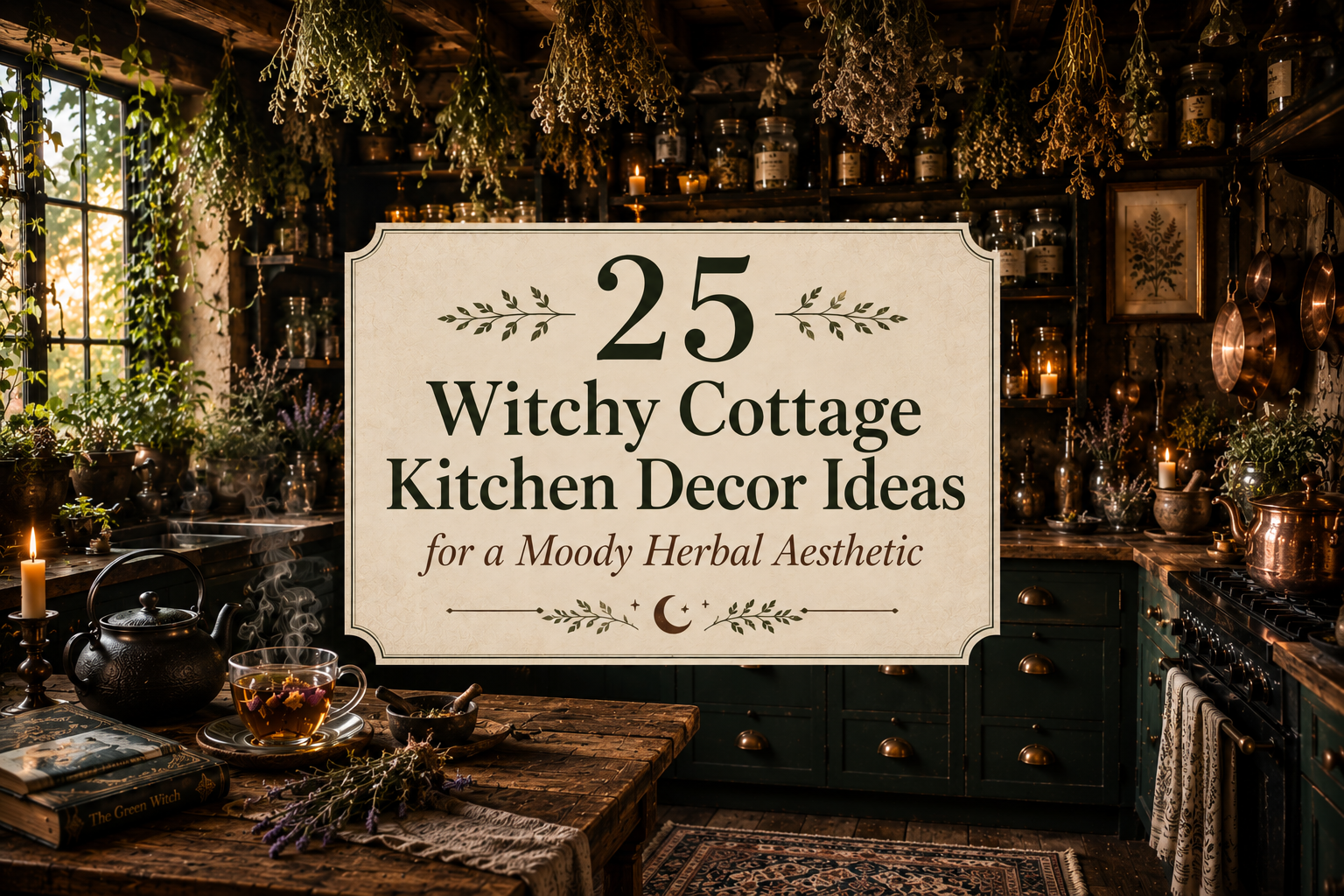
A witchy cottage kitchen combines layered textures, natural materials, and intentional clutter to create a space that feels grounded and lived-in. Rooted in witchy cottage kitchen styling, this approach overlaps naturally with witchy home decor and witchy decorations by focusing on herbs, dark tones, and functional displays. The result is a kitchen that balances utility with atmosphere, where every object contributes to both storage and visual weight.

1. Open Shelving with Herbal Storage
Replace upper cabinets with open wood shelving and fill them with jars of dried herbs, teas, and spices. Glass containers and labeled apothecary jars create both visibility and structure, which works best when there’s enough wall space to support a fuller, layered look without crowding.

2. Dark Wood Cabinets
Deep-stained or painted cabinets in tones like forest green, black, or espresso establish the moody base typical of witchy home decor, while matte finishes keep surfaces from reflecting too much light in darker palettes, making them more suitable in kitchens with decent natural light.

3. Hanging Dried Herbs and Florals
Bundles of lavender, rosemary, and wildflowers hung from beams or racks add texture overhead and reinforce the herbal focus while softening hard lines, especially effective in spaces with exposed beams or ceiling hooks that can handle suspended elements.

4. Vintage Copper Cookware Display
Copper pots and pans hung on walls or racks introduce warmth and reflective contrast against darker surfaces, and their natural patina develops over time, making them practical in kitchens where cookware is used frequently and stays within reach.

5. Apothecary-Style Storage
Use small drawers, labeled bottles, and compartment trays to organize spices and small tools, creating visual complexity without clutter, which becomes especially useful when cabinet space is limited and everything needs to stay accessible.

6. Stone or Butcher Block Countertops
Natural surfaces like wood or stone add weight and texture while grounding lighter decorative elements, and minor imperfections only add to the look, making them a strong choice for kitchens that see regular cooking and prep work.

7. Candle Clusters for Ambient Lighting
Grouping taper or pillar candles at varying heights introduces softer lighting layers that contrast overhead fixtures, helping define mood in kitchens that already have functional lighting in place.

8. Layered Rugs with Vintage Patterns
Patterned rugs placed in work zones bring warmth and visual variation while softening hard flooring underfoot, making them especially practical in kitchens where standing for long periods is common.

9. Glass Jar Pantry Displays
Clear jars for grains, flour, and dry goods keep ingredients visible while doubling as decor, and a consistent container style helps maintain order in kitchens where pantry items are accessed daily.

10. Dark Painted Walls
Charcoal, olive, or muted plum walls create a deeper backdrop that allows lighter objects and metals to stand out, which works best when balanced with natural light or multiple light sources to avoid a closed-in feel.

11. Antique or Vintage Furniture Pieces
Freestanding hutches, sideboards, or tables bring variation to built-in-heavy kitchens while adding age and character, making them easier to incorporate in layouts that aren’t tightly fixed.

12. Botanical Wall Art
Illustrations of herbs, plants, or fungi reinforce the theme without adding physical clutter, and they tend to work well in areas where wall space needs visual structure without adding bulk.

13. Iron or Wooden Hanging Racks
Mounted racks for utensils, pots, or herbs keep frequently used items accessible while adding material contrast, which becomes especially helpful when counter space is limited.

14. Layered Greenery and Potted Plants
Clusters of plants in varying heights and textures bring movement into the space, particularly effective in kitchens that receive enough natural light to support live greenery.

15. Distressed Wood Accents
Cutting boards, stools, and trays with visible wear and grain reinforce the rustic foundation of witchy decorations, making them a natural fit when everyday tools are left out in the open.

16. Moody Backsplash Choices
Backsplashes in deep tones or natural stone introduce subtle pattern without overwhelming the space, especially in kitchens where the backsplash covers a larger surface area.

17. Witchy Decorative Objects
Items like mortar and pestles, glass bottles, or aged books add thematic detail when grouped intentionally, working best when kept minimal to avoid clutter.

18. Mixed Metal Finishes
Combining brass, copper, and iron instead of matching finishes creates depth and variation, which is easier to achieve in kitchens where hardware and fixtures can be layered over time.

19. Soft Linen Textiles
Curtains, towels, and table coverings in muted, natural fabrics soften heavier materials and darker tones, making them especially useful in kitchens that lean heavily on wood and stone.

20. Warm, Low Lighting Fixtures
Pendant lights or sconces with warm bulbs help maintain a consistent glow that supports the overall mood, particularly in kitchens used frequently during evening hours.

21. Rustic Open Pantry Areas
Open pantry shelving or alcoves keep food storage visible and accessible while contributing to the layered look, making them more practical in kitchens with space to dedicate to pantry zones.

22. Layered Shelf Styling
Mixing functional items with decorative pieces across shelves creates variation in height and texture without rigid symmetry, which works best when shelving is a central visual feature.

23. Earth-Toned Color Accents
Muted greens, browns, and deep reds introduced through smaller items help tie the palette together without overwhelming the base, especially in kitchens that already lean neutral or dark.

24. Handcrafted Ceramics
Handmade dishes with slight irregularities add texture and authenticity while doubling as display pieces, making them particularly effective when stored on open shelving.

25. Subtle Seasonal Elements
Rotating herbs, dried florals, or small accents keeps the space feeling current without changing the overall setup, which is easiest to maintain in kitchens where decor swaps need to stay simple.
Leave a Reply