
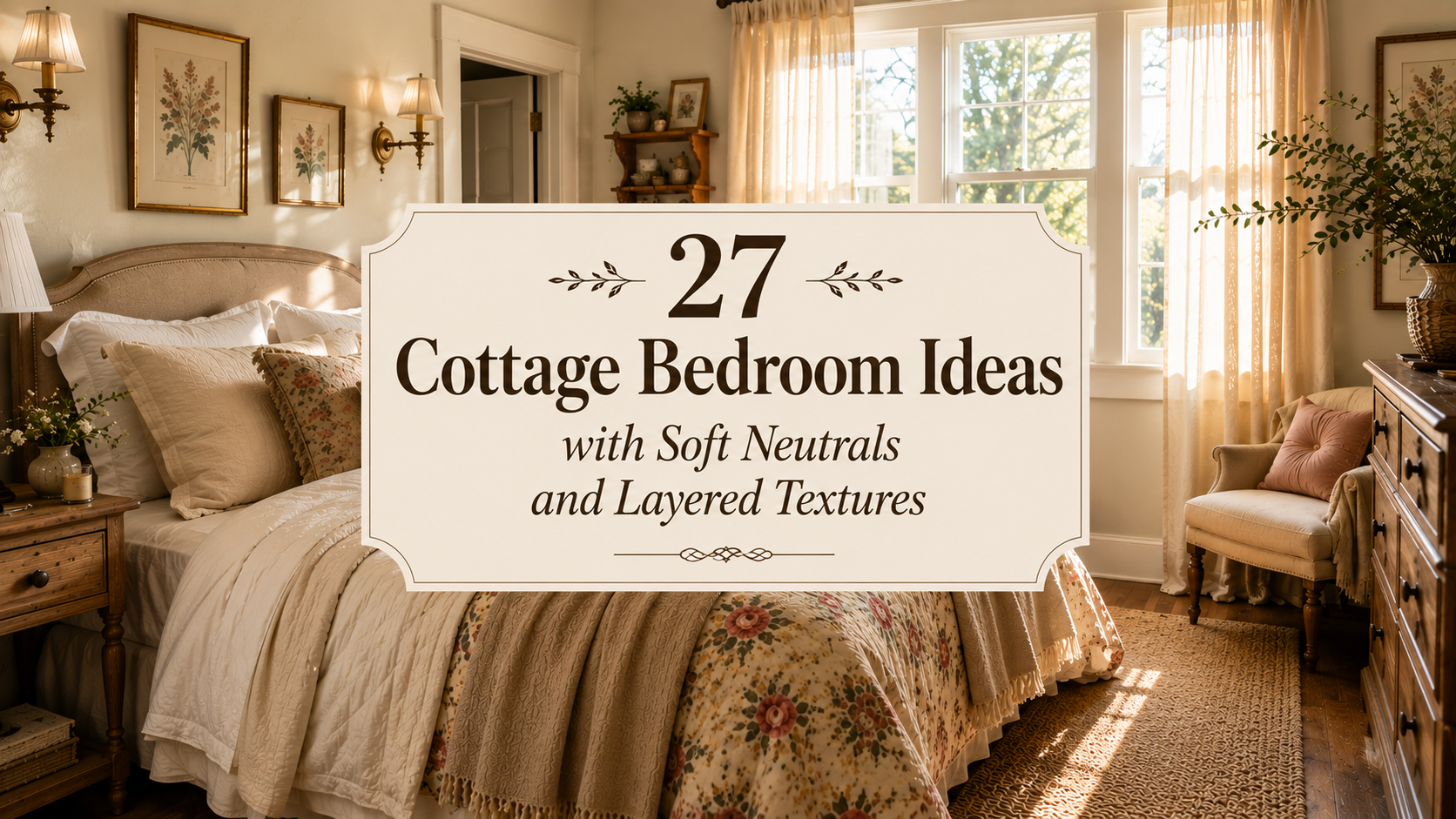
A cottage bedroom feels most inviting when the space looks layered, relaxed, and gently lived in rather than perfectly coordinated. Soft neutrals, natural materials, floral fabrics, and warm wood tones all work together to create a bedroom that feels calm without becoming flat or minimal. The best cottage decoration relies less on bold statement pieces and more on texture, softness, and subtle contrast that makes the room feel collected over time.
These cottage style ideas focus on practical ways to build warmth and depth through bedding, lighting, furniture, and layered textiles while keeping the overall space light and comfortable.

1. Layer Cream and Beige Bedding
Start with crisp white sheets, then build warmth with oatmeal linen duvets, quilted blankets, and soft knit throws in slightly varied neutral tones. The subtle shifts in texture keep the bed from feeling one-dimensional while still maintaining the quiet, airy look that defines a cottage bedroom, especially in smaller spaces where darker bedding can feel visually heavy.

2. Use Floral Quilts in Faded Tones
Soft floral quilts in washed sage, dusty rose, muted blue, or faded taupe instantly add cottage character without overwhelming the room. Slightly sun-faded prints tend to feel more timeless and relaxed than bright modern florals, particularly when paired with neutral bedding and simple painted furniture that lets the pattern breathe naturally.

3. Add Warm Wood Nightstands
Natural wood nightstands with visible grain, aged finishes, or gently worn edges help ground soft neutral bedrooms and add warmth that painted furniture alone sometimes lacks. Medium oak and warm pine tones usually create a softer balance than heavily distressed white finishes, especially in rooms that receive limited natural light during the day.

4. Choose Soft Linen Curtains
Lightweight linen curtains in warm white, flax, or pale beige soften incoming light and create an easy, breezy movement around the windows. Hanging the curtains slightly above the frame also helps draw the eye upward, which makes standard-height bedrooms feel a little more open and airy without requiring major changes to the room itself.

5. Style the Bed with Relaxed Layered Pillows
Layer euro shams, standard pillows, and a few smaller accent cushions in mixed fabrics like washed linen, cotton, and quilted textures for a bed that feels soft rather than overly polished. Keeping the palette neutral prevents the arrangement from looking too formal, which makes the space easier to maintain in everyday bedrooms that need to feel comfortable first.

6. Bring in Antique Brass Accents
Warm brass lamps, drawer pulls, curtain rods, and picture frames add quiet contrast against soft neutral bedding and pale painted walls. Slightly aged finishes feel especially natural within cottage decoration because they introduce warmth without relying on darker colors that can sometimes weigh down smaller bedrooms.

7. Use a Soft Neutral Area Rug
A large neutral rug beneath the bed helps anchor the entire room while adding warmth and softness underfoot on wood or laminate floors. Faded patterns and low-contrast designs usually feel more relaxed than sharp geometric prints, particularly in cottage style spaces where layered texture matters more than strong visual contrast.

8. Incorporate Cream Painted Furniture
Cream-painted dressers, bedside tables, and bed frames brighten the room while reflecting natural light in a softer way than stark bright white finishes. Pairing painted furniture with woven textures or warm wood accents keeps the space from feeling too flat, especially in bedrooms that already rely heavily on neutral tones.

9. Add Botanical Wall Art
Vintage-inspired botanical sketches, pressed floral prints, and soft countryside landscapes help reinforce the calm, collected feel of a cottage bedroom without overpowering the walls. Smaller framed groupings often work better than oversized statement pieces in narrow bedrooms where too much visual weight can make the room feel crowded.

10. Layer Neutral Throws Across the Bed
Fold lightweight throws across the foot of the bed or casually drape them over a reading chair to add softness and subtle texture variation throughout the room. Mixing gauzy cotton, washed linen, and chunky knit fabrics creates a more relaxed look while also making it easier to adjust warmth throughout different seasons.

11. Install Warm Wall Sconces
Wall sconces beside the bed create a softer and more intimate glow than overhead lighting alone while freeing up valuable surface space on smaller nightstands. Fabric shades help diffuse the light gently, which works especially well in compact cottage bedrooms where harsh lighting can make the room feel less inviting at night.

12. Mix Floral and Gingham Patterns
Combining muted gingham with faded floral prints creates the layered charm cottage style is known for without making the room feel overly busy. Keeping both patterns soft and understated allows them to blend naturally together, which tends to work better in smaller bedrooms where strong contrast can quickly overwhelm the space.

13. Use Woven Baskets for Storage
Wicker, seagrass, and rattan baskets bring natural texture into the room while giving extra blankets, books, and pillows a place to disappear neatly. Open woven storage feels visually lighter than solid bins or plastic containers, which helps maintain the relaxed and airy atmosphere that cottage bedrooms depend on.

14. Choose a Soft Upholstered Headboard
Neutral upholstered headboards in linen or cotton instantly soften the room and create a comfortable backdrop against layered bedding. Light textured fabrics feel more natural in cottage style spaces than velvet or glossy finishes, particularly when the surrounding furniture already includes heavier wood tones.

15. Add Fresh or Dried Greenery
Simple greenery arrangements bring life into a neutral cottage bedroom without interrupting the soft color palette. Olive branches, eucalyptus stems, and dried hydrangeas all add gentle texture while requiring far less maintenance than delicate fresh flowers in lower-light bedrooms.

16. Keep the Color Palette Warm and Muted
Warm whites, soft taupes, dusty sage, pale mushroom, and muted beige tones create a calm atmosphere while still giving the room enough variation to feel layered. Restricting the palette also makes it easier to mix different fabrics and furniture finishes without the room starting to feel visually cluttered.

17. Layer Bedding with Mixed Fabrics
Combining washed cotton sheets, linen duvets, quilted coverlets, and knit throws gives the bed a relaxed, lived-in softness that feels central to cottage decoration. The variation in fabric texture becomes especially important in neutral bedrooms where depth needs to come from materials rather than bold color contrasts.

18. Create a Small Reading Corner
A compact upholstered chair, soft lamp, and small wooden side table can turn an unused corner into a cozy reading spot without requiring much space. Keeping the furniture visually lightweight helps the room stay open, which matters more in bedrooms where every piece needs to earn its place.

19. Use Wallpaper on One Accent Wall
Soft floral or botanical wallpaper behind the bed introduces pattern and personality while still keeping the room balanced and calm. Limiting wallpaper to a single wall prevents the space from feeling overly busy, especially in cottage bedrooms that already include layered bedding and textured fabrics.

20. Choose Simple Wood Bed Frames
Wood bed frames with spindle details, curved silhouettes, or lightly weathered finishes add character without becoming too ornate. Simpler shapes tend to age better visually over time, particularly in cottage style rooms where the goal is warmth and comfort rather than heavy decoration.

21. Layer Sheer Curtains with Linen Panels
Pairing sheer curtains behind heavier linen drapes creates softness around the windows while filtering daylight more gently throughout the room. This layered approach works especially well in bedrooms that need additional privacy but still benefit from natural morning light.

22. Add Soft Ambient Lighting
Table lamps with warm bulbs, wall sconces, and subtle accent lighting create a calmer atmosphere than relying entirely on a bright ceiling fixture. Layered lighting becomes even more important during colder months when bedrooms naturally receive less daylight and can start to feel flat by evening.

23. Use Neutral Bedding with Subtle Patterns
Thin stripes, faded florals, stitched detailing, and soft ticking patterns add quiet variation without interrupting the calm neutral palette. Low-contrast designs also tend to blend more naturally with seasonal decor changes, which makes the room easier to update over time without replacing larger pieces.

24. Incorporate Rustic Ceiling Beams
Wood ceiling beams instantly add warmth and architectural texture to cottage bedrooms, even when the rest of the room stays soft and minimal. Natural wood overhead also helps balance pale walls and bedding, particularly in bedrooms that might otherwise feel visually lightweight from floor to ceiling.

25. Style Open Shelves with Restraint
A few stacked books, ceramic vases, framed artwork, and small greenery arrangements create interest without making the room feel cluttered. Leaving visible empty space between objects helps open shelving feel calmer and more intentional, especially in smaller bedrooms where too much decor can quickly overwhelm the walls.

26. Use Soft Painted Wall Colors
Warm white, pale sage, soft mushroom, and muted cream walls create a gentler backdrop than stark bright white paint while allowing layered textiles to stand out naturally. Slightly muted wall colors also tend to soften shadows and imperfections better in older homes with uneven light.

27. Balance the Room with Natural Textures
Linen bedding, woven baskets, wood furniture, ceramic decor, and cotton curtains all help cottage style bedrooms feel grounded and relaxed instead of overly polished. Natural textures are often what give neutral spaces their warmth, particularly in bedrooms where the color palette stays intentionally soft and understated.
Leave a Reply