
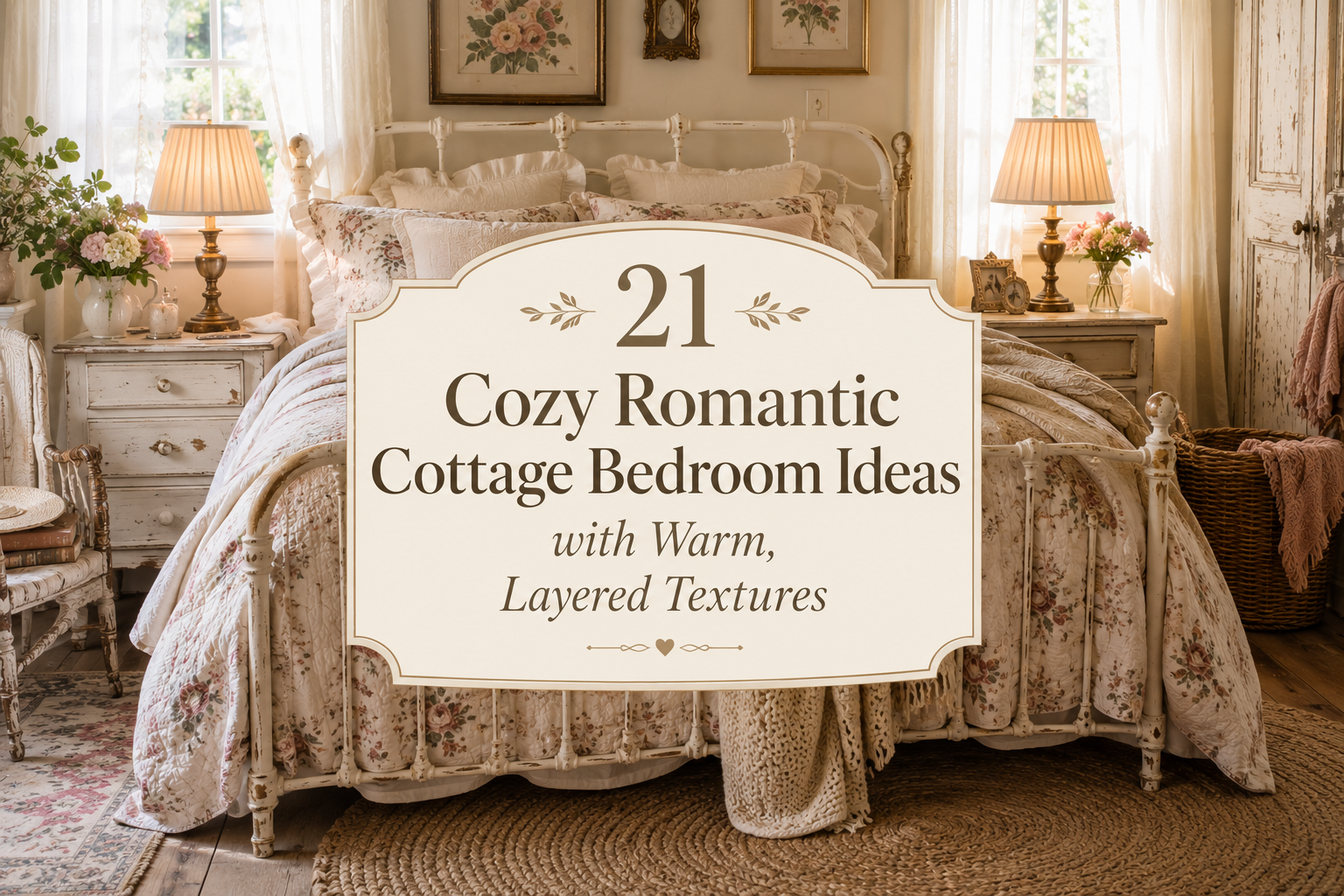
A romantic cottage bedroom blends softness, age-worn detail, and layered materials to create a space that feels settled and cohesive. These romantic bedroom ideas focus on texture, light, and subtle contrast, all grounded in cottage style principles that favor comfort over precision. Each approach below highlights a distinct way to build warmth and depth without losing the relaxed structure that defines this look.

1. Layered White Bedding with Mixed Textures
Start with a white or off-white base and build upward using quilts, coverlets, and soft throws in varying weights and weaves. The contrast between linen, cotton, and knit materials creates dimension without relying on color, which helps maintain visual lightness in smaller rooms.

2. Floral Prints in Muted Tones
Incorporate floral patterns through bedding, curtains, or accent pillows, keeping the palette soft and slightly faded. Avoid high-contrast prints in favor of designs that blend into the overall scheme, especially in spaces with strong natural light where bold patterns can feel overpowering.

3. Distressed Wood Furniture
Use dressers, nightstands, or bed frames with visible wear, chipped paint, or patina to anchor the room in cottage style. These pieces add age and structure to otherwise soft surroundings, which helps balance rooms that lean heavily on light fabrics.

4. Sheer Curtains for Diffused Light
Hang sheer or semi-sheer curtains to filter natural light and soften the edges of the room. Light diffusion enhances the romantic quality without adding visual weight, making it easier to manage brightness in rooms with larger windows.

5. Iron Bed Frames with Curved Lines
Choose an iron bed frame with gentle curves or simple scrollwork to introduce structure without heaviness. Painted finishes in white or soft neutrals maintain cohesion, which works well when the bed needs to stand out without dominating the room.

6. Layered Rugs for Warmth
Place a smaller patterned rug over a larger neutral base to build texture underfoot. This adds warmth and visual layering without requiring permanent flooring changes, which is useful in bedrooms with hard surfaces that can feel cold or echo-prone.

7. Vintage-Inspired Lighting Fixtures
Use table lamps or wall sconces with fabric shades, aged brass, or ceramic bases. Lighting should feel ambient rather than directional, creating a softer atmosphere that suits bedrooms used for winding down rather than task-focused activities.

8. Soft Neutral Color Palette
Stick to creams, warm whites, pale taupes, and muted pastels to maintain cohesion. Subtle shifts in tone create depth without strong contrast, which keeps the room feeling open while still visually layered.

9. Ruffled or Pleated Textiles
Incorporate ruffles or pleats in bedding, pillowcases, or curtains to introduce movement and softness. These details work best when used sparingly so the room doesn’t feel overly decorative or visually crowded.

10. Antique or Vintage Accents
Add small decorative items such as framed prints, ceramic pitchers, or aged mirrors. These pieces reinforce the lived-in quality central to cottage style, particularly in rooms with enough surface space to display them without clutter.

11. Upholstered Headboards in Soft Fabrics
Choose linen or cotton upholstery in neutral tones to soften the bed’s structure. Subtle tufting or simple shaping adds detail without excess, which makes sense in bedrooms where comfort and back support are part of daily use.

12. Open Shelving with Curated Decor
Install simple wooden shelves to display books, folded linens, or small objects. Keeping arrangements minimal and consistent in tone prevents the storage from feeling busy, especially in smaller bedrooms where visual simplicity matters.

13. Washed Wood Finishes
Opt for furniture with washed or limed finishes that reduce contrast and highlight grain. This keeps the room cohesive while adding texture, which is helpful when balancing rustic elements with softer materials.

14. Layered Pillows in Varying Sizes
Combine standard pillows, euro shams, and smaller accent cushions in complementary fabrics. Variation should come from texture rather than bold color shifts, which helps maintain proportion on larger beds without creating visual noise.

15. Subtle Lace Details
Introduce lace through trims, pillow edges, or lightweight throws to add delicate texture. Keeping these details minimal prevents the space from feeling overly styled, particularly in rooms that already rely on soft neutrals.

16. Painted Wood Paneling or Beadboard
Add wall texture with painted paneling in white or muted tones. This provides structure without overwhelming the space, making it a practical choice for rooms that lack architectural detail.

17. Cozy Reading Corners
Incorporate a small chair with a throw blanket and soft lighting to create a functional corner within the bedroom. A setup like this fits naturally into larger layouts where dividing the space improves how it’s used day to day.

18. Wicker or Rattan Accents
Use baskets, chairs, or small decor pieces in natural fibers to introduce contrast and texture. Keeping tones warm and subdued ensures these elements add variation without feeling out of place in a soft palette.

19. Layered Window Treatments
Combine sheer curtains with heavier drapes for flexibility in light control and added depth. Coordinating tones keeps the look cohesive while allowing adjustments for privacy and brightness throughout the day.

20. Softly Aged Metal Accents
Incorporate brushed or aged finishes in hardware, lighting, or decor to complement wood and fabric elements. These subtle contrasts work well in rooms that need material variation without introducing harsh finishes.

21. Balanced Mix of Old and New
Combine vintage-inspired pieces with newer, simpler items to prevent the room from feeling overly styled or themed. Maintaining consistency in tone and material helps the space stay practical and cohesive over time.
Leave a Reply