
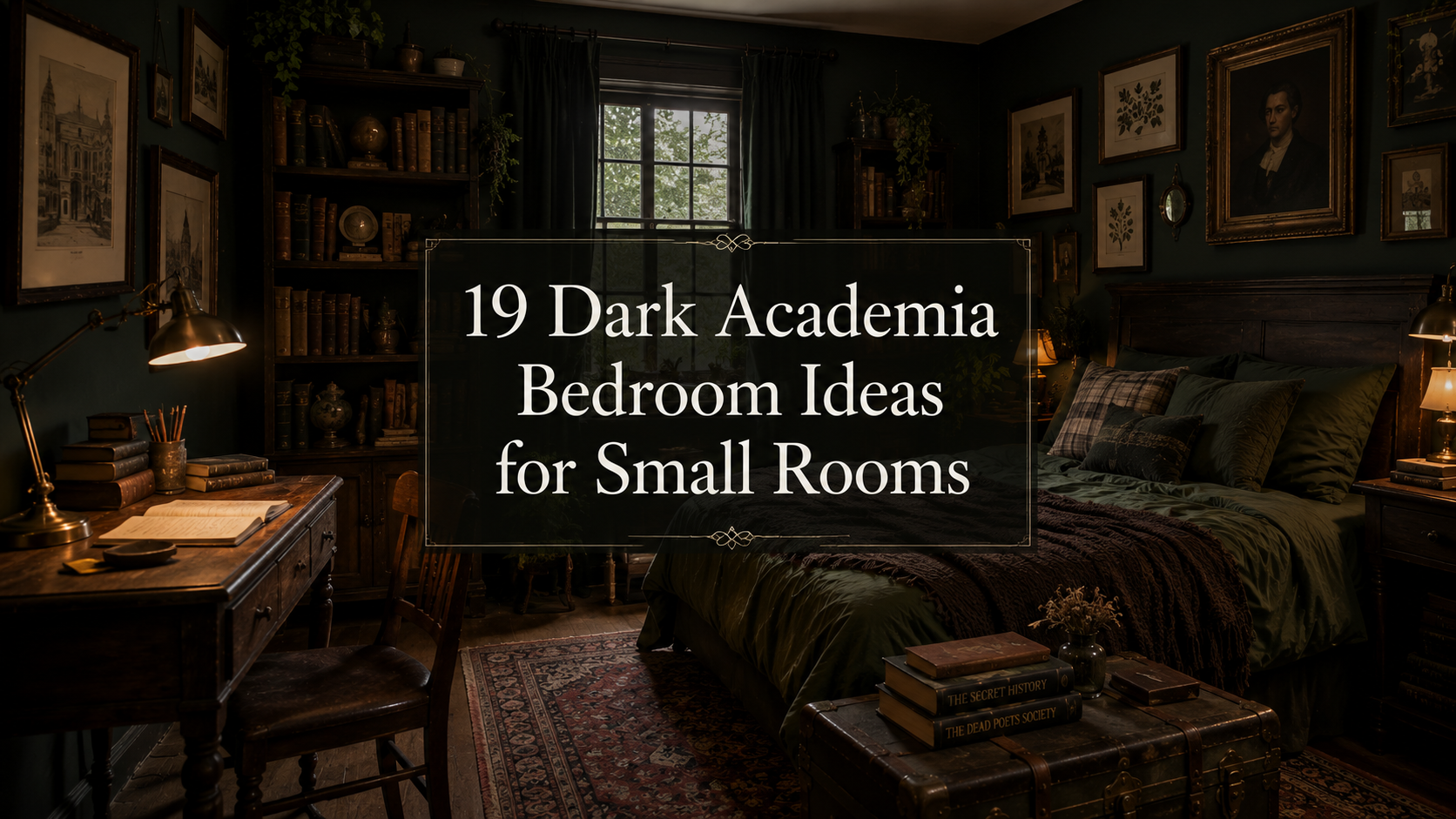
A dark academia bedroom doesn’t need a large footprint to capture the timeless atmosphere of old libraries, historic universities, and antique homes. The key is choosing furniture, colors, lighting, and decorative details that create depth without making the room feel cramped. These ideas combine practical layouts with the layered character of a dark academia room while embracing a classic dark academia aesthetic that feels collected rather than cluttered.

1. Paint the Walls a Deep, Saturated Color
Rich shades like olive green, charcoal, navy, chocolate brown, or deep burgundy immediately establish the moody foundation associated with dark academia interiors. Dark walls blur the edges of the room, creating surprising depth while allowing antique furniture and artwork to become focal points. A matte finish enhances the soft, historic appearance. This approach works especially well when the room receives enough natural light during the day.

2. Choose One Statement Wooden Bed
An antique-inspired bed with carved details or a substantial wood frame anchors the room without requiring excessive decoration. Dark stained oak, walnut, or mahogany introduces warmth while reinforcing the scholarly atmosphere. Let the bed become the centerpiece instead of filling the room with multiple oversized furniture pieces. A single substantial focal point keeps smaller bedrooms feeling more organized.

3. Layer Vintage Rugs Instead of Using One Large Rug
Smaller Persian-style or faded oriental rugs add color, texture, and age without overwhelming limited floor space. Layering rugs introduces visual interest while helping different areas of the room feel intentionally defined. Slightly worn patterns complement antique furniture and soften hardwood floors. This technique is especially useful when a single large rug would cover too much of the room.

4. Build a Compact Reading Corner
A comfortable chair, a small side table, and a warm reading lamp can transform an unused corner into a quiet retreat. Even compact bedrooms often have enough space beside a window or bookshelf for a dedicated reading area. Choosing furniture with exposed legs keeps the arrangement feeling lighter. A reading nook is easiest to include when circulation paths remain clear.

5. Install Floor-to-Ceiling Bookshelves
Tall shelving draws the eye upward and makes the room appear larger while providing valuable storage. Fill the shelves with books, vintage frames, globes, and a few carefully chosen decorative objects instead of overcrowding every surface. Vertical storage makes better use of limited square footage than multiple smaller cabinets. This layout works particularly well in rooms with standard or higher ceiling heights.

6. Add Botanical Wallpaper to One Wall
A single accent wall covered in vintage-inspired botanical wallpaper introduces pattern without shrinking the room. Floral illustrations, woodland scenes, or antique prints reinforce the academic atmosphere while allowing the remaining walls to stay visually calm. Keeping the wallpaper to one wall prevents the space from feeling busy. Accent walls are especially effective behind the bed.

7. Use Warm Ambient Lighting
Replace cool white bulbs with warm lighting from table lamps, sconces, or shaded floor lamps. Layered light creates depth throughout the evening while highlighting wood grain, artwork, and textiles. Soft pools of light contribute far more to the mood than one bright ceiling fixture. Multiple light sources are especially valuable in rooms painted with darker colors.

8. Decorate with Antique Frames
Collect vintage oil paintings, botanical prints, architectural sketches, or antique portraits in wood and brass frames. Mixing different frame sizes creates the collected appearance often found in historic libraries and studies. Hanging artwork close together produces more impact than scattering small pieces across every wall. Gallery arrangements fit naturally above beds, desks, or dressers.

9. Choose Dark Green Bedding
Deep forest green bedding adds richness without making the room feel heavy. Layer quilts, linen duvets, and textured blankets in complementary earth tones to create visual depth rather than relying on bold patterns. Mixing fabrics introduces interest while maintaining a restrained palette. Layered bedding is especially practical during colder seasons.

10. Incorporate a Vintage Writing Desk
A compact wooden desk brings both function and character to a small bedroom. Look for drawers, turned legs, or worn finishes that suggest decades of use without occupying unnecessary floor space. Pair it with a classic chair and a brass desk lamp to complete the scholarly atmosphere. Smaller desks work best when positioned near natural light.

11. Display Stacks of Hardcover Books
Books become decorative elements when stacked on nightstands, desks, and shelves instead of being hidden away. Mixing old bindings with newer editions creates texture while reinforcing the lived-in academic feel. Keeping stacks intentional rather than excessive prevents surfaces from becoming cluttered. This approach works best when books are grouped by size or color.

12. Add Heavy Linen or Velvet Curtains
Floor-length curtains soften the room while framing windows with dramatic texture. Deep green, brown, charcoal, or burgundy fabrics complement traditional wood furniture and help filter bright daylight into a softer glow. Hanging curtains close to the ceiling also makes the room appear taller. Fuller curtains are especially effective on smaller windows.

13. Decorate with Brass Candlesticks
Vintage brass candlesticks introduce subtle metallic warmth without feeling flashy. Whether displayed on dressers, bookshelves, or mantels, they contribute to the timeless atmosphere while reflecting warm evening light. Mixing different heights creates a more natural collected look. Decorative candle displays work best when balanced with other simple accessories.

14. Bring in Dark Botanical Elements
Fern varieties, ivy, dried branches, or leafy houseplants soften the heavier furniture while adding natural texture. Botanical elements echo the scientific curiosity often associated with classic academic interiors without overwhelming the room. Simple terracotta or aged ceramic planters keep the focus on the plants themselves. Greenery is easiest to maintain near windows with moderate light.

15. Mix Wood Tones Instead of Matching Everything
Combining walnut, oak, mahogany, and weathered pine prevents the room from looking like a furniture showroom. Historic interiors naturally accumulated pieces over time, and slight variations create more authenticity than perfectly coordinated sets. Similar undertones keep the room cohesive while allowing each piece to retain its character. Mixed woods work particularly well when the overall color palette remains restrained.

16. Use Vintage Storage Trunks
An old trunk at the foot of the bed provides concealed storage while doubling as furniture. Leather straps, brass hardware, and weathered wood reinforce the old-world atmosphere without taking up additional wall space. The flat surface can also hold folded blankets or decorative books. Multifunctional pieces are especially valuable in compact bedrooms.

17. Style a Layered Nightstand
Combine a reading lamp, a stack of books, a small framed print, and a ceramic dish to create an intentional bedside vignette. Limiting the display to a handful of useful objects prevents the surface from feeling crowded while maintaining visual interest. Repeating warm materials keeps the arrangement cohesive. Smaller nightstands benefit from carefully edited styling.

18. Let the Ceiling Stay Light
While dark walls create atmosphere, a lighter ceiling reflects available light and helps prevent a compact room from feeling enclosed. Soft cream, warm white, or pale taupe maintains balance without disrupting the overall mood. The contrast also highlights crown molding or architectural details when present. This combination is especially helpful in rooms with lower ceilings.

19. Prioritize Collected Character Over Perfect Symmetry
The most memorable dark academia bedrooms rarely feel perfectly coordinated. Mixing antique finds, inherited furniture, vintage artwork, and layered textiles creates a room that feels personal and lived in rather than staged. Allow the space to evolve gradually as new pieces are discovered instead of trying to furnish everything at once. This approach keeps even small rooms feeling authentic because every addition has room to stand on its own.
Leave a Reply