
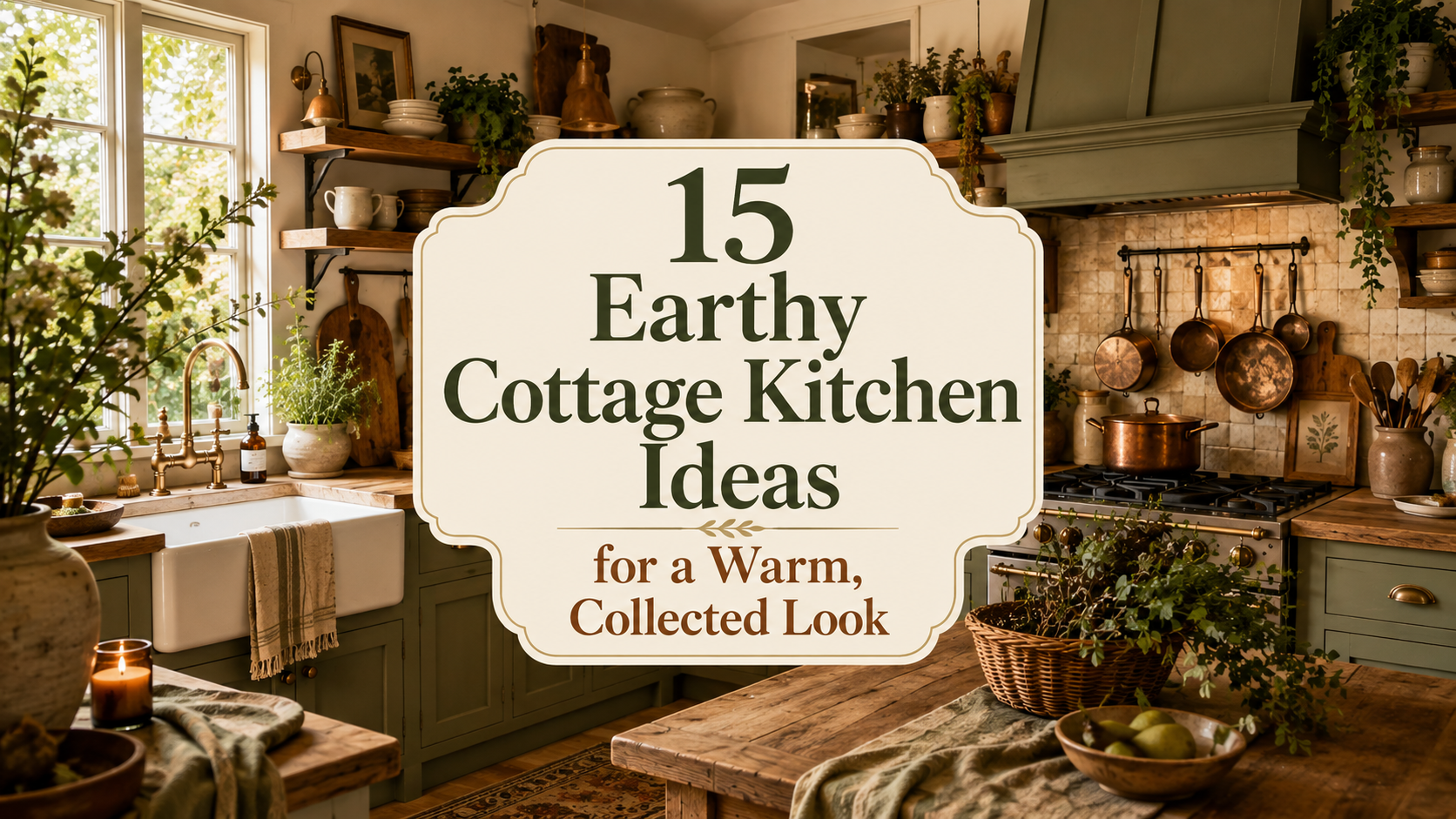
An earthy cottage kitchen combines natural materials, muted color, practical storage, and details that feel gathered over time rather than installed all at once. Warm wood, aged metals, soft greens, stone, woven textures, and open shelving give the space character while keeping it functional for everyday use. These ideas bring earthy cottage decor into the kitchen through finishes, furniture, lighting, and accessories that work together without requiring every surface to match. In an earthy cottage home, the strongest kitchens usually balance rustic materials with enough simplicity to keep the room usable and visually grounded.

1. Use Warm Wood Cabinetry
Natural wood cabinetry establishes much of the warmth associated with an earthy cottage kitchen. Oak, pine, walnut, and other visible-grain woods add variation that painted surfaces cannot fully replicate, especially when the finish allows knots and grain patterns to remain visible.
Wood cabinets can be used throughout the room or limited to lower cabinets, an island, or a freestanding pantry. Pairing them with quieter walls and counters keeps the grain from competing with too many other textures. Medium and slightly darker finishes tend to create more depth than pale washed woods, while aged or matte finishes support the collected character of the style. Full wood cabinetry works particularly well in kitchens with good natural light, while smaller or darker rooms may benefit from limiting wood to selected areas.

2. Choose Muted Green Cabinets
Soft olive, sage, moss, and gray-green cabinetry brings color into the kitchen without overpowering natural materials. These shades work especially well beside warm wood, cream walls, stone counters, and aged brass or copper.
Rather than using a highly saturated green, look for colors with brown, gray, or yellow undertones that relate easily to other earthy finishes. Green can cover all cabinetry or appear only on a lower run, pantry cabinet, or island. Natural variation in wood and stone becomes more noticeable against a quiet green background, which helps the kitchen feel layered rather than overly coordinated. Muted green cabinets are most useful when a room needs color but still has to remain compatible with several natural finishes.

3. Add Open Wood Shelving
Open shelving introduces visible storage while adding another layer of natural wood. Thick shelves with a simple edge can hold everyday dishes, jars, baskets, cutting boards, or small pieces of pottery without making the kitchen feel overly decorated.
Spacing is important because tightly packed shelves can quickly become visually heavy. Keeping frequently used objects within reach and leaving some open space between groups makes the arrangement easier to maintain. Shelves do not need to match the cabinetry exactly, and slight differences in wood tone can make the room feel more collected. Open shelving makes the most sense in kitchens where everyday dishes can remain organized and where closed storage is still available for less attractive necessities.

4. Bring in Aged Brass and Copper
Aged metal finishes add warmth without introducing another major color. Brass handles, copper pans, bronze lighting, and darkened metal hooks develop more character when their surfaces are allowed to look slightly worn rather than highly polished.
Mixing metals can work when the finishes share a muted, aged quality. Copper cookware beside brass cabinet hardware, for example, feels connected because both materials have warm undertones. Limiting highly reflective chrome or polished surfaces helps preserve the softer finish associated with earthy cottage decor. Aged metals are particularly effective in kitchens dominated by wood, cream, and green because they add contrast without creating a sharp visual break.

5. Use Stone or Stone-Look Counters
Stone counters provide a grounded surface that works naturally with wood cabinets and softer cottage finishes. Materials with subtle movement, warm veining, or a slightly matte appearance generally sit more comfortably within the style than highly polished, strongly patterned surfaces.
Cream, beige, soft gray, and warm white counters can all work depending on the cabinet color. Honed finishes reduce glare and allow the surrounding wood and metal details to remain more noticeable. A stone-look material can create a similar effect when natural stone does not suit the budget or maintenance requirements. Quieter counter patterns are easier to use in kitchens that already contain visible wood grain, open shelving, tile, and displayed accessories.

6. Add a Farmhouse Sink
A deep apron-front sink reinforces the practical side of an earthy cottage kitchen while providing a strong traditional shape. White fireclay is common, but stone, copper, and darker finishes can also work when they relate to the surrounding counters and hardware.
Because the sink already has a substantial visual presence, nearby details can remain restrained. A simple bridge faucet, muted cabinet color, and uncomplicated backsplash keep the area from feeling too formal or heavily themed. The deep basin also offers useful space for large cookware and baking dishes. An apron-front sink is most practical in kitchens where the cabinet layout can accommodate its depth and where the larger basin supports regular cooking or cleanup needs.

7. Display Wooden Cutting Boards
Wooden boards add texture to counters and backsplashes without requiring permanent changes. Mixing several sizes and grain patterns creates a more natural arrangement than using identical boards, especially when they are leaned casually against the wall near a preparation area.
Round, rectangular, handled, and irregular shapes can be combined as long as the group remains limited enough to avoid crowding the counter. Boards that are actually used tend to develop scratches and color variation that support the lived-in appearance of the room. Their warm tones also help connect stone, tile, and painted cabinetry back to the wood used elsewhere. Displayed cutting boards work best where sufficient counter depth remains for food preparation and small appliances.

8. Use Simple Cream or Handmade-Look Tile
A restrained backsplash gives wood, cabinetry, and displayed objects room to carry more of the visual interest. Cream, warm white, pale taupe, and softly uneven tiles fit easily into an earthy cottage kitchen without creating a high-contrast backdrop.
Handmade-look tile with slight variation in glaze or edges adds texture even when the color is simple. Straight stacking, running bond, and other uncomplicated layouts keep the backsplash from feeling overly designed. Warm grout can soften the contrast further and relate the tile to wood or stone nearby. Subtle tile is especially useful in smaller kitchens or rooms with open shelving, where a busy backsplash would compete with objects stored in front of it.

9. Add Woven Baskets for Storage
Woven baskets introduce natural fiber while providing practical storage for produce, linens, pantry items, or less frequently used kitchen supplies. Their irregular texture works particularly well alongside smooth counters and painted cabinetry.
Baskets can be placed on open shelves, above cabinets, under a console, or inside an island. Limiting them to a few repeated shapes or tones keeps the room from looking overly rustic. Natural tan, brown, and muted olive fibers connect easily with wood and other earthy cottage decor. Woven storage is most useful for lightweight items and dry goods, while heavier or frequently handled kitchen equipment is usually better kept in solid drawers or cabinets.

10. Use Vintage-Style Lighting
Lighting can reinforce the cottage character without relying on decorative accessories. Simple pendants with metal shades, aged brass fixtures, milk-glass globes, or understated ceramic bases all add shape and material while remaining functional.
Fixtures with slightly weathered or matte finishes usually blend more naturally with timber and stone than glossy contemporary designs. Scale matters, particularly above an island or small dining table, where oversized pendants can dominate the room. Repeating the metal finish used on cabinet hardware creates enough connection even when the fixture itself is different in style. Vintage-style lighting works best when the fixture size suits the ceiling height and leaves clear sight lines through the kitchen.

11. Include Freestanding Furniture
A freestanding hutch, narrow table, butcher block, or vintage cabinet can make a kitchen feel less like a continuous run of fitted cabinetry. These pieces introduce different wood tones, hardware, and proportions that support the collected appearance of an earthy cottage home.
The furniture does not need to match the built-in cabinets. A darker wood hutch can create useful contrast against green or cream cabinetry, while a painted table can add another muted color. Freestanding pieces also make it easier to adjust storage over time without changing the permanent layout. This approach is most practical when the room has enough circulation space to accommodate furniture without narrowing primary work paths.

12. Hang Practical Items on the Wall
Hooks and rails allow frequently used kitchen tools to become part of the visual composition. Copper pans, wooden spoons, linen towels, small baskets, and utensils can create texture on otherwise empty wall areas while keeping useful items within reach.
Grouping similar objects together prevents the arrangement from becoming scattered. A short rail beside the stove, for example, creates a clear functional zone rather than spreading hanging items across several walls. Dark metal, brass, or wood hooks tend to sit comfortably with the muted finishes used elsewhere in the kitchen. Wall-mounted storage is particularly useful in small kitchens where drawer and cabinet capacity is limited but vertical space is available.

13. Bring in Pattern Through Textiles
Textiles provide a controlled way to add pattern without changing permanent finishes. Gingham, small florals, simple stripes, and muted checks can appear on café curtains, towels, seat cushions, or a small table covering.
Keeping the palette connected to existing greens, creams, browns, and warm reds helps patterned fabrics blend with the rest of the room. One or two patterns are generally enough, particularly when cabinetry and shelving already contain natural variation. Fabrics are also easy to replace as they wear, making them less restrictive than patterned tile or counters. Textile pattern works best in kitchens that need softness around hard wood, metal, stone, and ceramic surfaces.

14. Add Potted Herbs and Greenery
Herbs and simple greenery reinforce the natural palette while adding variation in height and texture. Small pots of rosemary, thyme, basil, or other kitchen herbs can sit on a windowsill, open shelf, or counter where they receive appropriate light.
Terracotta, aged ceramic, and simple stoneware pots fit easily with warm wood and muted cabinetry. Rather than filling every surface with plants, a few concentrated groups usually create a stronger effect. Choosing varieties based on actual light conditions keeps the greenery practical rather than purely decorative. Live plants are most suitable near bright windows, while low-light kitchens may require fewer plants or more shade-tolerant varieties.

15. Keep the Overall Finish Collected, Not Matching
The most convincing earthy cottage kitchen usually contains materials that relate without matching exactly. Slightly different wood tones, aged metals, handmade-looking ceramics, woven fibers, and muted colors create depth when they are repeated in a controlled way.
Avoiding complete furniture sets and perfectly coordinated accessories allows individual pieces to contribute their own texture and history. Repetition still matters, so recurring greens, warm woods, cream surfaces, and dark accents can hold the room together even when the objects come from different sources. Leaving some surfaces relatively simple gives the more distinctive pieces enough space to register. A collected approach is easiest to maintain when the kitchen begins with a restrained material palette and adds variation gradually rather than introducing many unrelated finishes at once.
Leave a Reply