
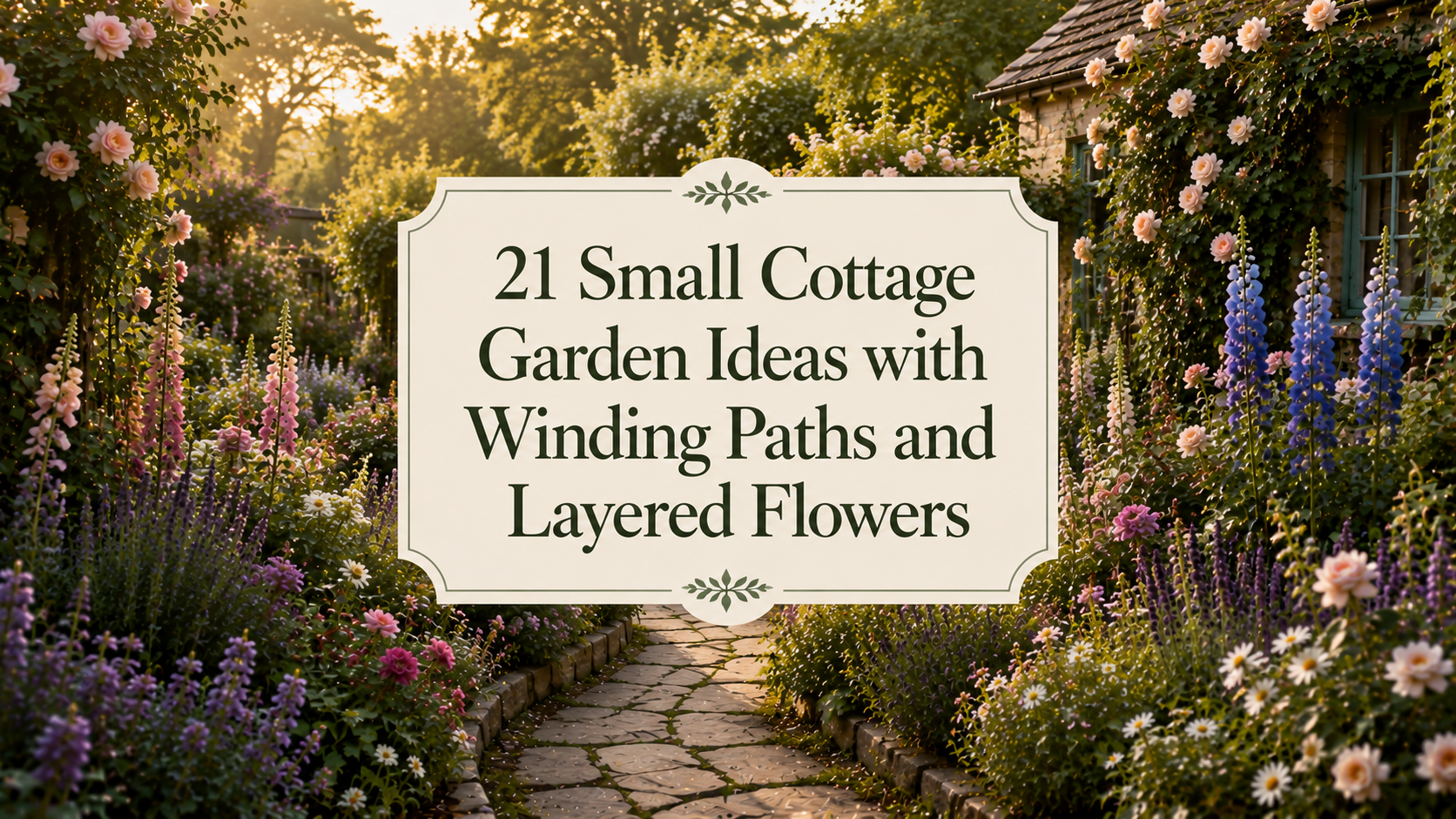
A small cottage garden works best when every part of the space contributes to structure, movement, and planting depth. The most effective cottage garden ideas use narrow paths, dense borders, vertical supports, and repeated flowers to create a full appearance without overwhelming a compact yard.
Good cottage garden design depends on balance rather than excess. Paths should remain usable, taller plants should not block smaller ones, and decorative features should support the planting instead of competing with it. The following ideas focus on layout, plant placement, boundaries, and practical details that suit limited outdoor space.

1. Create a Narrow Winding Path
A gently curving path makes a small garden feel longer by preventing the entire layout from being visible at once. Stone, brick, gravel, or stepping stones can all work, provided the surface remains stable and easy to maintain.
Keep the path narrow enough to preserve planting space, but wide enough for comfortable movement. Slight curves are more practical than sharp bends, especially when carrying tools or watering cans.
This approach suits compact gardens where a straight path would make the space feel shorter and more exposed.

2. Layer Plants by Height
Layered planting creates depth by placing low growers at the front, medium-height flowers in the middle, and taller plants toward the back. This arrangement keeps each layer visible while making the border appear fuller.
Use ground covers, compact perennials, upright flowers, and shrubs in a gradual progression. Repeating the same heights in several areas will keep the design from looking random.
This method works best in narrow borders where every plant needs to contribute without blocking the rest.

3. Use Flowers Along Both Sides of the Path
Planting both edges of a walkway creates a continuous garden experience rather than separating the path from the beds. Soft foliage and flowering stems can lean slightly inward without making the route difficult to use.
Choose plants that tolerate occasional brushing and avoid thorny varieties in tight circulation areas. Low lavender, catmint, hardy geraniums, and small daisies can soften edges without creating a barrier.
This choice is practical when the path is used mainly for walking rather than moving large equipment.

4. Add a Small Arbor
A compact arbor creates height and marks a transition between one part of the garden and another. It can frame an entrance, define a seating area, or support climbing roses, clematis, or honeysuckle.
The structure should be proportionate to the space and positioned where it will not shade nearby beds excessively. Simple wood or dark metal designs usually blend more easily with dense planting.
An arbor makes the most sense where the garden needs a focal point without sacrificing ground-level planting space.

5. Plant Repeating Flower Groups
Repeating small groups of the same flowers gives a compact cottage garden a more organized appearance. Instead of using one of every plant, place the same variety in several parts of the border.
Repetition can be based on color, flower shape, or foliage texture. A recurring plant helps connect areas that contain different combinations of species.
This approach is especially useful in small gardens where too many isolated varieties can make the layout feel fragmented.

6. Use Soft Edging Materials
Brick, weathered stone, low timber, and simple metal edging can define beds without making them look rigid. The edging should control soil and gravel while remaining visually quiet.
Avoid overly tall borders that separate plants from the path. Low edging allows foliage to soften the boundary and keeps the garden connected.
Soft edging is suitable where clear bed lines are needed but a formal appearance would feel out of place.

7. Add Vertical Planting Against Walls
Walls and fences can support climbing plants, narrow trellises, wall planters, or espaliered shrubs.
Vertical planting increases the amount of greenery without reducing valuable floor space.
Choose plants according to light exposure and available support. Climbers should be tied securely and pruned so they do not cover windows, vents, or neighboring structures.
This strategy is most useful in enclosed gardens where horizontal planting space is limited.

8. Include a Compact Seating Spot
A small bench, bistro chair, or narrow seat can make the garden more usable without requiring a full patio. Place it at the end of a path, beside a wall, or within a small opening in the planting.
Keep the surrounding area clear enough for comfortable access. A seat with a slim frame or backless design will occupy less visual space.
A compact seating area works best where it can borrow shade, privacy, or a view from the existing layout.

9. Plant Around a Corner
Corners often become underused spaces, but they can hold layered planting, a small tree, an urn, or a simple bench. Curving the border into the corner softens hard boundaries and makes the garden feel less box-like.
Use taller plants or shrubs at the back and keep the foreground lower. This creates depth without reducing the apparent width of the garden.
Corner planting is effective when the yard has visible fencing or walls that need to feel less dominant.

10. Mix Flowers with Herbs
Herbs add fragrance, texture, and practical value to flower borders. Rosemary, thyme, sage, chives, and oregano can sit among ornamental plants without requiring a separate kitchen garden.
Place sun-loving herbs in open areas and keep moisture requirements in mind when grouping them with flowers. Frequent harvesting will also help control their size.
This combination suits small gardens where planting space needs to serve both decorative and everyday uses.

11. Use a Restrained Color Palette
A limited palette helps a small garden feel connected. Choose two or three main flower colors and support them with white, green, or muted foliage.
Soft pink, lavender, white, blue, and pale yellow often combine easily, but stronger colors can work when repeated carefully. Too many unrelated shades can make a compact border appear visually crowded.
A restrained palette is most helpful where planting is dense and the garden already contains several hardscape materials.

12. Add One Small Tree
A compact tree can provide height, shade, and seasonal interest without taking over the garden. Multi-stemmed trees, dwarf fruit trees, and small ornamental varieties are often suitable choices.
Position the tree where its mature canopy will not block paths or crowd nearby beds. Root spread and shade levels should be considered before planting.
One well-placed tree works better than several competing specimens in a garden with limited width.

13. Use Containers to Fill Gaps
Containers make it easier to adjust color and height throughout the season. Place them beside steps, near seating areas, at path turns, or in temporary gaps between permanent plants.
Use a limited range of pot materials and colors to avoid visual clutter. Larger containers are generally easier to maintain than many small ones because they dry out more slowly.
Containers are practical where soil conditions vary or planting needs to remain flexible.

14. Let Some Plants Spill Over Edges
Trailing and spreading plants can soften paths, low walls, and raised beds. Thyme, alyssum, creeping phlox, and low-growing geraniums create a natural transition between hard and planted surfaces.
Keep growth trimmed where it could create a tripping hazard or cover drainage areas. Controlled spillover looks intentional, while unmanaged growth can make the garden difficult to use.
This treatment works best along secondary edges rather than the narrowest part of the main walkway.

15. Add a Simple Gate
A small gate can frame the entrance and reinforce the enclosed character of a cottage garden. Wood pickets, painted timber, and simple metal designs work well with layered planting.
The gate should open fully without hitting pots or foliage.
Keeping the structure low or partially open will prevent it from making a small front garden feel closed off.
A gate is most suitable where the garden needs a clear boundary from a sidewalk, driveway, or neighboring area.

16. Plant for More Than One Season
A small border should provide interest across several months rather than relying on one short flowering period. Combine spring bulbs, summer perennials, autumn seed heads, and evergreen structure.
Staggering bloom times keeps the garden active without requiring constant replacement planting. Foliage texture and plant form should also contribute when flowers are absent.
This approach is important in compact gardens where every bed remains visible throughout the year.

17. Use Gravel in Tight Areas
Gravel is useful for narrow paths, small seating zones, and awkward corners where paving would be expensive or difficult to install. It allows drainage and can be shaped around planting more easily than large slabs.
Use a stable base and suitable edging to keep gravel contained. Fine decorative gravel may shift too easily in heavily used areas.
Gravel works best where traffic is light and the garden needs a flexible surface around irregular beds.

18. Add a Birdbath or Small Focal Piece
A single birdbath, stone trough, urn, or compact sculpture can anchor the planting without taking up much room. The feature should be visible from the main approach or seating area.
Keep the scale modest and surround it with lower plants so it remains easy to see. Too many decorative objects can make the garden feel crowded.
One focal piece is most effective when the planting already provides enough detail on its own.

19. Use Dense Planting to Suppress Weeds
Close planting reduces exposed soil and can help limit weed growth once plants are established. Combine spreading ground covers with upright perennials and compact shrubs.
Spacing should account for mature size rather than the immediate appearance at planting. Overcrowding too early can restrict airflow and increase maintenance.
Dense planting is useful where the goal is a full border, but it still requires enough space for healthy growth and access.

20. Keep the Lawn Small or Remove It
A small lawn can divide the garden into useful zones, but an oversized one often takes space away from borders and paths. Reducing the lawn allows more room for flowers, seating, or planted edges.
Where grass is retained, keep the shape simple so it is easy to mow. In very small yards, gravel, paving, or continuous planting may be more practical.
This decision makes sense when lawn maintenance provides less value than additional planting or circulation space.

21. Leave Enough Space for Maintenance
A full cottage garden still needs access for pruning, watering, dividing plants, and removing weeds. Paths should reach the main beds, and taller plants should not make the back of the border inaccessible.
Avoid filling every gap immediately. Plants will expand over time, and some open soil is useful during establishment.
This restraint is essential in a small cottage garden where poor access can turn dense planting into a long-term maintenance problem.
Leave a Reply