
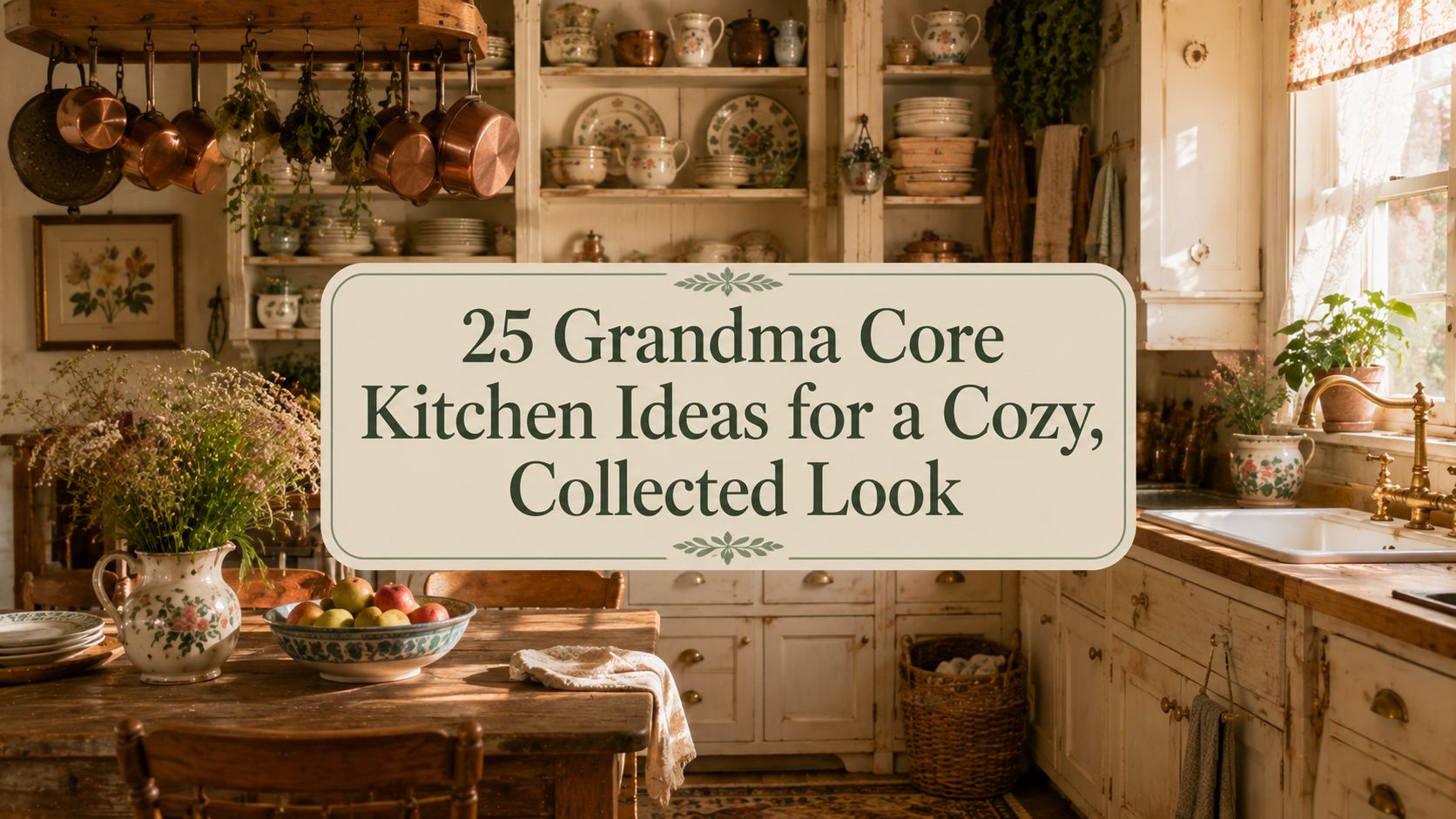
A grandma core kitchen combines practical storage, traditional materials, inherited-looking furnishings, and decorative details that develop character over time. The grandma core aesthetic is less about matching every surface and more about creating a room that feels useful, familiar, and gradually assembled.
The most convincing kitchens balance pattern and ornament with durable work surfaces, accessible storage, and enough open space for daily routines. These ideas cover cabinetry, textiles, lighting, furniture, displays, and smaller grandma core decor choices that can be adapted to kitchens of different sizes.

1. Use Warm Wood Cabinetry
Wood cabinetry creates an immediate sense of age and substance, especially when the grain and natural color remain visible. Medium oak, walnut, pine, and stained maple work well because they bring warmth without requiring additional ornament.
Existing cabinets can be updated with a warm stain, aged brass hardware, or a muted painted finish on selected sections. Mixing painted upper cabinets with wood lower cabinets can also prevent the room from feeling too uniform.
Natural wood is most effective in kitchens with good daylight or pale walls that keep its visual weight balanced.

2. Add a Freestanding Hutch
A freestanding hutch provides storage while making the kitchen look less fitted and contemporary. It can hold dishes, serving pieces, linens, cookbooks, or pantry items that would otherwise be hidden behind standard cabinet doors.
Choose a piece with glass doors, open shelving, or shallow drawers so frequently used objects remain easy to reach. A painted hutch can introduce a muted color without committing to fully colored cabinetry.
This choice makes the most sense when the kitchen has an unused wall and needs flexible storage without permanent construction.

3. Display Collected Plates
Decorative plates bring pattern and history to walls that would otherwise remain empty. Botanical designs, transferware, hand-painted ceramics, and mismatched floral plates all support a collected appearance.
Arrange them above a doorway, beside a window, or across a narrow section of wall. A loose grouping usually looks more natural than a perfectly symmetrical grid.
Plate displays work best away from active cooking zones where grease and steam would increase maintenance.

4. Install Café Curtains
Café curtains cover the lower portion of a window while allowing daylight to enter from above. Cotton checks, small florals, linen blends, and embroidered fabrics suit the grandma core aesthetic without blocking too much light.
They can be mounted on a tension rod for a simple installation that is easy to remove and wash. Repeating the curtain fabric in a tea towel or seat cushion creates continuity without making the room overly coordinated.
Café curtains are particularly useful for street-facing kitchens that need privacy during the day.

5. Choose Floral Textiles
Small-scale floral patterns add color and detail through curtains, tablecloths, cushions, aprons, and dish towels. Faded reds, dusty pinks, muted yellows, and soft greens are easier to combine than highly saturated prints.
Use one dominant floral pattern and support it with plain or checked fabrics. Too many equally bold patterns can make a working kitchen feel visually crowded.
Textiles offer the most flexibility in rented homes or kitchens where permanent finishes cannot be changed.

6. Use Open Shelves for Everyday Dishes
Open shelves make practical items part of the room’s decoration. Stacks of plates, ceramic bowls, mugs, glass jars, and small pitchers create a useful display when arranged by type rather than by exact color.
Shelves should be deep enough to hold dishes securely but narrow enough to avoid projecting into circulation areas. Wood or painted brackets add a traditional detail that suits the rest of the room.
Open shelving is most suitable for frequently used items that will not sit long enough to collect dust.

7. Add Skirted Lower Cabinets
Fabric skirts can replace selected cabinet doors beneath a sink, worktable, or open counter. Checks, stripes, and small botanical prints soften hard cabinetry and introduce movement into the room.
The fabric should hang from a removable rod or concealed track so it can be taken down for washing. A lined material will hold its shape better and conceal stored items more effectively.
Skirted storage is practical for low-use cabinets, but solid doors remain easier to maintain beside ovens and waste bins.

8. Bring In a Wooden Worktable
A freestanding wooden table can serve as an informal island, food preparation surface, or central gathering point. Pieces with worn edges, turned legs, or lower shelves look established without requiring decorative distressing.
The table should be slightly lower than or close to standard counter height if it will be used for regular preparation. Locking casters can make a heavier piece easier to reposition.
A worktable is a better choice than a fixed island when the layout needs to remain adaptable.

9. Use Vintage-Style Lighting
Pendant lights, shaded wall sconces, and small chandeliers can establish a traditional tone without changing the kitchen’s structure. Milk glass, pleated fabric shades, aged brass, enamel, and ribbed glass all fit comfortably within the style.
Lighting should still provide enough focused illumination over sinks, counters, and tables. Decorative fixtures work best when paired with concealed task lighting beneath cabinets.
This approach suits rooms that need stronger character but cannot accommodate major renovations.

10. Choose Aged Brass Hardware
Aged brass handles and knobs add warmth to painted or wood cabinetry. Cup pulls, simple round knobs, and cabinet latches create a traditional effect without drawing too much attention.
Hardware does not need to match every other metal in the room. Slight variation between brass, copper, and dark iron can support a naturally collected look.
Replacing hardware is most effective when the cabinetry is sound but lacks detail.

11. Create a Tea and Baking Station
A dedicated tea or baking area turns everyday supplies into an organized display. Store tins, mixing bowls, measuring tools, jars, and frequently used ingredients together on a tray, shelf, or small section of counter.
Ceramic canisters and glass jars can conceal modern packaging while keeping contents visible or clearly labeled. Leave enough open counter space for preparation rather than filling the entire area with accessories.
This setup is useful in kitchens where repeated tasks need to remain efficient and easy to reset.

12. Mix Mismatched Dining Chairs
Mismatched chairs give a breakfast table or dining corner the appearance of having developed over time. Similar wood tones or repeated seat cushions can connect different shapes without making them identical.
Keep the seat heights consistent so the arrangement remains comfortable. One painted chair can introduce color, while the others remain in natural wood finishes.
This method works especially well when replacing an entire matching set would be unnecessary or expensive.

13. Add a Small Breakfast Nook
A breakfast nook creates a defined place for casual meals, reading, or food preparation. A built-in bench can provide storage beneath the seat, while a compact table keeps the footprint manageable.
Layer the seating with washable cushions rather than deep upholstery that may hold cooking odors. A wall-mounted light can make the corner usable without taking up table space.
A nook is most practical in an unused corner where standard dining furniture would interrupt circulation.

14. Display Ceramic Canisters
Ceramic canisters bring color and pattern to counters while organizing dry ingredients. Floral motifs, handwritten labels, ribbed surfaces, and simple cream glazes all work within grandma core decor.
Use canisters for ingredients that are accessed regularly, and keep less frequently used food in sealed pantry storage.
Grouping three or four pieces together looks more intentional than scattering them around the kitchen.
Countertop storage is best limited to items that justify the space they occupy.

15. Hang Copper Cookware
Copper pots, pans, and utensils contribute warm metallic color and reflect natural light. They can be hung from a wall rail, pot rack, or individual hooks near the main cooking area.
Functional copper requires regular care, while decorative pieces can be allowed to develop a darker patina. Avoid placing cookware where it will interfere with cabinet doors or walking paths.
Hanging storage is most useful in kitchens with limited cabinet space and sufficient wall or ceiling clearance.

16. Use Checked and Gingham Patterns
Checks and gingham provide a straightforward way to introduce traditional pattern. They can appear on curtains, table linens, chair cushions, or small accessories without competing with floral elements.
Choose a muted two-color combination such as cream and sage, brown and ivory, or faded red and white. Larger checks have more visual weight, while smaller patterns blend more easily with other prints.
This pattern is a practical choice for washable textiles that receive frequent use.

17. Add Framed Botanical Art
Botanical illustrations, pressed flowers, seed packet designs, and small landscape prints can fill narrow wall areas with detail. Mixed frames in wood, brass, and painted finishes create a more gradual, collected effect than identical frames.
Keep valuable paper artwork away from sinks and cooking surfaces. Reproductions or sealed prints are better suited to areas exposed to humidity.
Framed art works best on walls where shelves or storage would project too far into the room.

18. Include a Vintage-Inspired Rug
A patterned rug can soften hard flooring and introduce color at ground level. Faded florals, narrow runners, and small medallion designs work particularly well in long galley layouts or between an island and sink.
Choose a low-pile, washable, or tightly woven material that will not trap crumbs or obstruct cabinet doors. A rug pad helps prevent movement on tile or wood floors.
Rugs are most practical outside the direct splash zone and away from high-grease cooking areas.

19. Style a Window Ledge with Useful Objects
A deep window ledge can hold small plants, a ceramic pitcher, a clock, or a few frequently used kitchen objects. Keeping the arrangement low preserves the light and maintains a clear view.
Limit the number of items so the ledge remains easy to clean. Plants should be selected according to the window’s exposure rather than appearance alone.
This treatment suits kitchens with good natural light and enough sill depth to hold objects securely.

20. Add Crochet and Embroidered Details
Crochet edging, embroidered linens, and handmade pot holders introduce texture associated with traditional domestic craft. These details are most effective in small amounts, such as a trimmed shelf liner or a framed textile.
Use washable pieces near working areas and reserve delicate items for display shelves. Neutral thread colors can keep intricate patterns from becoming visually heavy.
Handmade textiles are better placed away from open flames and consistently damp surfaces.

21. Use Muted Green Cabinetry
Muted green connects easily with wood, brass, cream ceramics, and floral fabrics. Sage, olive, and gray-green finishes can be applied to all cabinetry or limited to a hutch, island, or lower cabinets.
Test the color under both natural and artificial light before painting a large area. Greens with too much blue may appear cooler than expected in north-facing rooms.
Muted green is most successful when the kitchen needs color but already contains several patterned elements.

22. Create an Everyday Table Centerpiece
A kitchen table centerpiece can be functional rather than formal. A ceramic bowl of fruit, a small jug of seasonal branches, or a tray holding salt, napkins, and condiments provides visual structure without preventing daily use.
Keep the arrangement low enough for conversation and light enough to move quickly. Fresh flowers can be added occasionally without becoming a permanent maintenance requirement.
A compact centerpiece is most appropriate for tables that serve several purposes throughout the day.

23. Incorporate Visible Cookbooks
Cookbooks add color, texture, and a sense of regular use. Store them upright on a shelf, stacked beneath a cabinet, or grouped in a small freestanding rack near the preparation area.
Keep frequently referenced books accessible and move valuable editions away from steam and splashes. A limited selection usually looks more orderly than an overfilled shelf.
Visible cookbooks are practical when they remain close to a clear work surface and do not reduce essential storage.

24. Combine Old and New Appliances Carefully
Modern appliances can remain part of a grandma core kitchen when their visual impact is managed. Panel-ready fronts, simple finishes, appliance garages, and traditional hardware can help contemporary equipment sit more quietly within the room.
Small appliances in cream, soft green, black, or metal finishes are easier to integrate than several bright, unrelated colors. Function should take priority over selecting equipment solely for its period appearance.
This balance is necessary in kitchens that require current performance without a fully modern visual effect.

25. Leave Room for the Collection to Develop
A collected kitchen should not look completed all at once. Empty wall space, partially filled shelves, and a restrained number of accessories allow useful or meaningful pieces to be added gradually.
Start with functional items, then introduce artwork, ceramics, linens, and inherited objects as they become available. Repeating a few materials or colors will maintain cohesion even when individual pieces do not match.
A gradual approach is especially effective in smaller kitchens where excessive grandma core decor would reduce workspace and make cleaning more difficult.
Leave a Reply