Tag: home

  • 15 Dopamine Decor Ideas That Feel Joyful, Not Overwhelming

    15 Dopamine Decor Ideas That Feel Joyful, Not Overwhelming

    Dopamine decor is about creating spaces that feel joyful, comforting, and energizing to live in. The rooms that work best are colorful and expressive, but they are not chaotic. They feel intentional, cohesive, and personal.

    What makes dopamine decor successful isn’t using more color.
    It’s using color thoughtfully.

    The Dopamine Decor Color Rule (A Helpful Guide, Not a Law)

    Most dopamine decor rooms use roughly three to five colors, often within the same color family, and repeat them throughout the space.

    Common combinations include:
    Pink, coral, cream, and soft red
    Teal, turquoise, mustard, and warm wood
    Pastel pink, mint, lavender, and white
    Peach, butter yellow, sage, and light oak

    Pastels tend to allow for more flexibility because they blend naturally. Brighter palettes usually stay a bit tighter. This is not a strict rule, but a guide that helps bold color feel cohesive instead of overwhelming.

    1. Use Rugs to Introduce Two or Three Colors, Not the Whole Palette


    A rug does not need to contain every color in your room. In many dopamine decor spaces, the rug introduces just two or three key colors. Those colors are then repeated in pillows, art, furniture, or accessories elsewhere. The rug starts the color story, it doesn’t have to finish it.

    2. Keep Your Sofa and Change the Surroundings


    Replacing furniture is not always realistic. Many dopamine decor rooms keep neutral sofas and transform them with color around and on top of them. Slipcovers in palette colors, textured throws, and bold pillows can visually pull an existing sofa into the color plan without replacing it. The surrounding decor often does more work than the furniture itself.

    3. Build Color Through Art Instead of Paint


    Colorful walls are common, but paint is not required. Art often carries the color load in dopamine decor spaces. Gallery walls repeat the same few colors across prints, frames, and mats, creating visual impact without permanent changes. This approach works especially well in rentals.

    4. Repeat Colors Across Different Textures


    Repeating a color in multiple materials keeps a room from feeling flat. The same shade might appear in velvet upholstery, ceramic decor, painted wood, and soft textiles. Texture variation adds depth while color repetition maintains cohesion.

    5. Use Warm, Ambient Lighting Instead of Overhead Lights


    Lighting in dopamine decor spaces is warm and soft rather than flashy. Harsh overhead lighting is often avoided. Instead, rooms rely on table lamps, floor lamps, and sculptural lamps that create an ambient glow. Amber-toned bulbs are common, adding warmth without overpowering the space. Sculptural lamps, including lotus-style lamps, appear frequently because they combine warmth, texture, and visual interest.

    6. Let Mirrors Add Color and Shape


    Mirrors are often part of the decor rather than disappearing into the background. Wavy silhouettes, scalloped edges, and colorful frames add shape and reinforce the palette while reflecting light around the room.

    7. Mix Patterns That Share a Color Family


    Pattern mixing is common in dopamine decor, but it works because the colors stay related. Stripes, florals, checks, and abstract prints can coexist when they pull from the same palette or color family. Pastel-based rooms often stretch this further because the tones blend naturally.

    8. Use Decor Objects to Reinforce Color


    Smaller decor pieces quietly repeat the palette throughout the room. Vases, trays, books, planters, and sculptural objects are chosen for how well they echo existing colors rather than introducing new ones. This repetition builds cohesion without clutter.

    9. Painted Furniture Is Optional, Not Required


    Painted cabinets and furniture appear often, but they are not mandatory. Similar impact can be achieved with removable elements such as shelf liners, peel-and-stick wallpaper on furniture backs, or decor grouped by color. Commitment is optional, cohesion is not.

    10. Start With One Small Space


    Dopamine decor does not need to take over an entire home. Many people start with a smaller area, such as a reading nook, hallway bathroom, or bedroom corner. Smaller spaces make it easier to experiment with color and decide whether the style feels right before expanding further.

    11. Let Neutrals Support the Color


    Neutrals play a supporting role, not an opposing one. Creams, whites, light wood tones, and soft grays appear frequently, especially in rentals. They provide breathing room and allow brighter colors to stand out without overwhelming the space.

    12. Repeat One Color More Than the Others


    Even in rooms with several colors, one shade usually appears most often. This might be pink, teal, yellow, or another palette color. Repeating one color across furniture, art, and decor gives the eye a consistent anchor and helps the space feel balanced.

    13. Edit Before Adding More


    Successful dopamine decor rooms are edited, not crowded. If an item does not fit the color family or overall mood, it is often removed rather than worked around. Editing keeps bold spaces feeling intentional instead of overwhelming.

    14. Keep Whimsical Pieces Inside the Color Plan


    Playful decor elements feel elevated when they stay within the established palette. Sculptural objects and novelty accents work best when they reinforce the color story rather than competing with it.

    15. Let the Space Settle Before Changing It


    Once colors repeat naturally and the room feels balanced, it helps to pause and live with the space. Dopamine decor is about long term enjoyment, not constant adjustment. A room that feels good day after day is doing its job.

  • 12 Dark Academia Bedroom Ideas

    12 Dark Academia Bedroom Ideas

    Dark academia bedrooms are moody, layered, and rich with old-world character. Deep colors, vintage furniture, low lighting, and collected details create spaces that feel scholarly and lived-in rather than styled. Below are dark academia bedroom ideas that lean into depth, texture, and atmosphere. Save what speaks to you and build from there.

    1. Moody Color-Drenched Walls

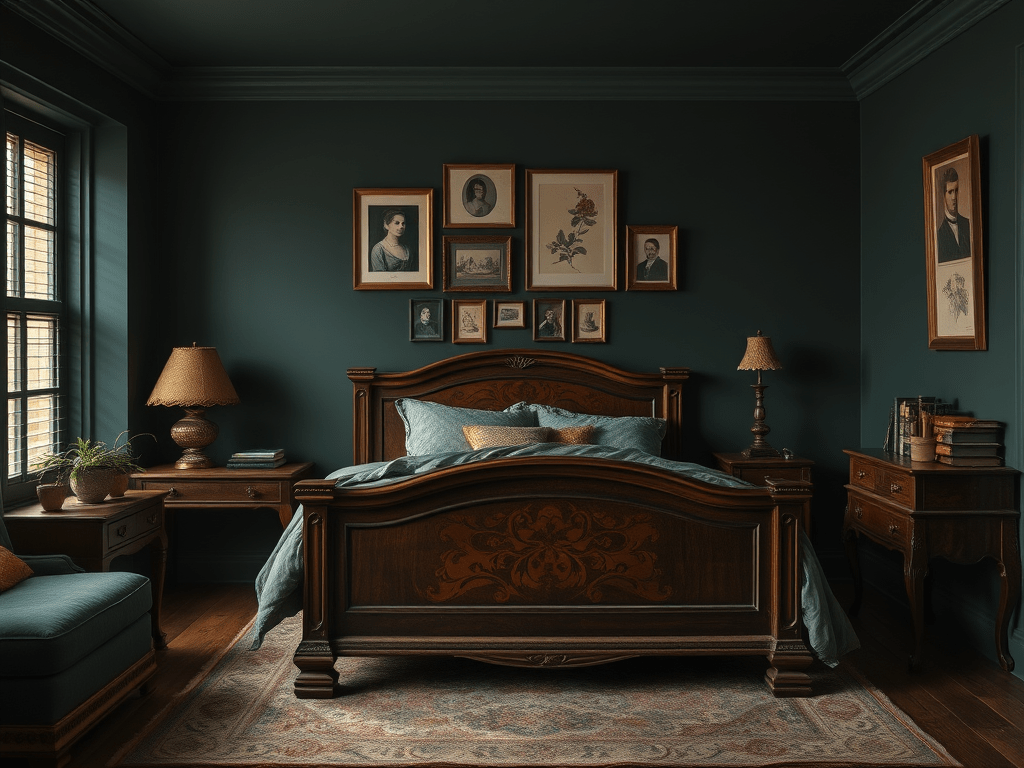
    Dark academia bedrooms almost always start with the walls. Deep, saturated colors like forest green, oxblood, charcoal, and near-black create the enclosed, library-like feeling that defines the style. Light walls instantly break the illusion, even if everything else is “right.”

    If painting isn’t an option, peel-and-stick wallpaper works surprisingly well here, especially designs that mimic old plaster, botanical illustrations, dark florals, or vintage mural patterns. Matte finishes and slightly imperfect prints look far more convincing than anything glossy or modern.

    The goal isn’t contrast. It’s immersion. When the walls fade into shadow, the furniture, artwork, and lighting naturally feel richer and more intentional.

    2. Gallery Walls with Classical Art

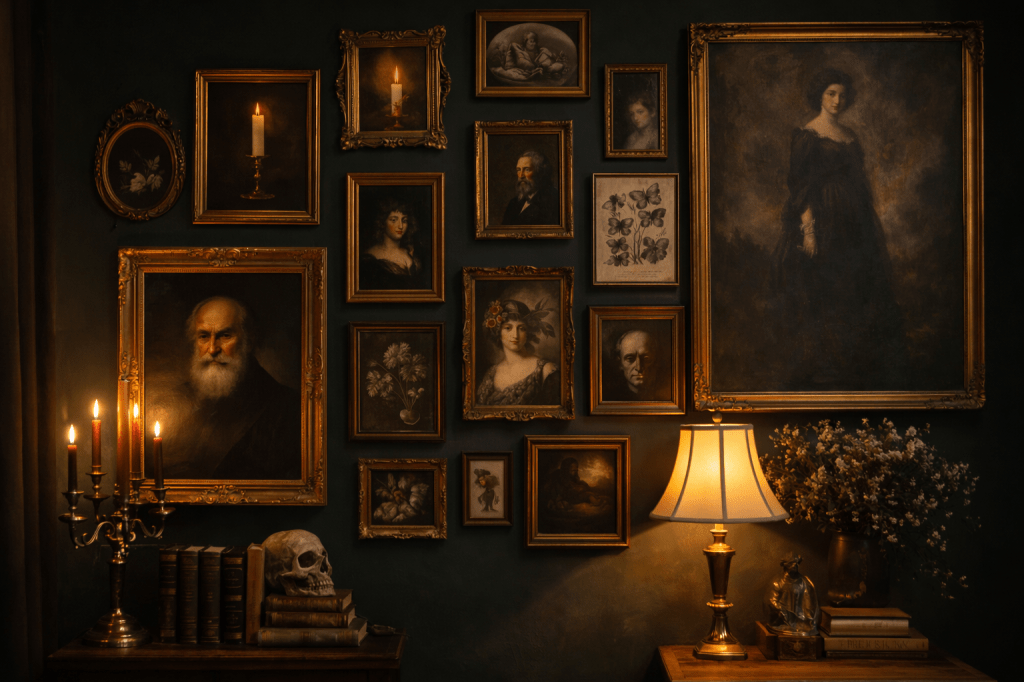
    Gallery walls are a core dark academia visual. Mix oil-painting reproductions, antique inspired portraits, botanical prints, and sketches in mismatched frames. Slightly crooked and tightly grouped beats perfectly spaced every time.

    Gold, brass, or dark wood frames work best. If the art looks a little moody, faded, or mysterious, you’re doing it right.

    3. A Bed Frame with Vintage or Antique Charm

    A dark academia bedroom needs a bed with presence. Solid wood frames with carved details, turned legs, or slightly worn finishes anchor the room and instantly skew old-world instead of modern.

    Thrifted, antique, or reproduction styles all work as long as the silhouette feels traditional. Canopy and four-poster frames show up constantly in search results for a reason. They add height, drama, and that library-meets-manor feeling without needing extra decor.

    4. Layered Antique-Style Rugs

    Rugs do a lot of the heavy lifting in dark academia bedrooms. Persian, Turkish, or worn-look rugs add pattern and depth that grounds the space and keeps it from feeling flat.

    Layering works especially well here. A smaller patterned rug over a larger neutral one looks collected and intentional, not styled for a catalog. Slight fading, muted reds, deep blues, and earthy tones all fit the mood.

    5. Heavy, Textured Bedding

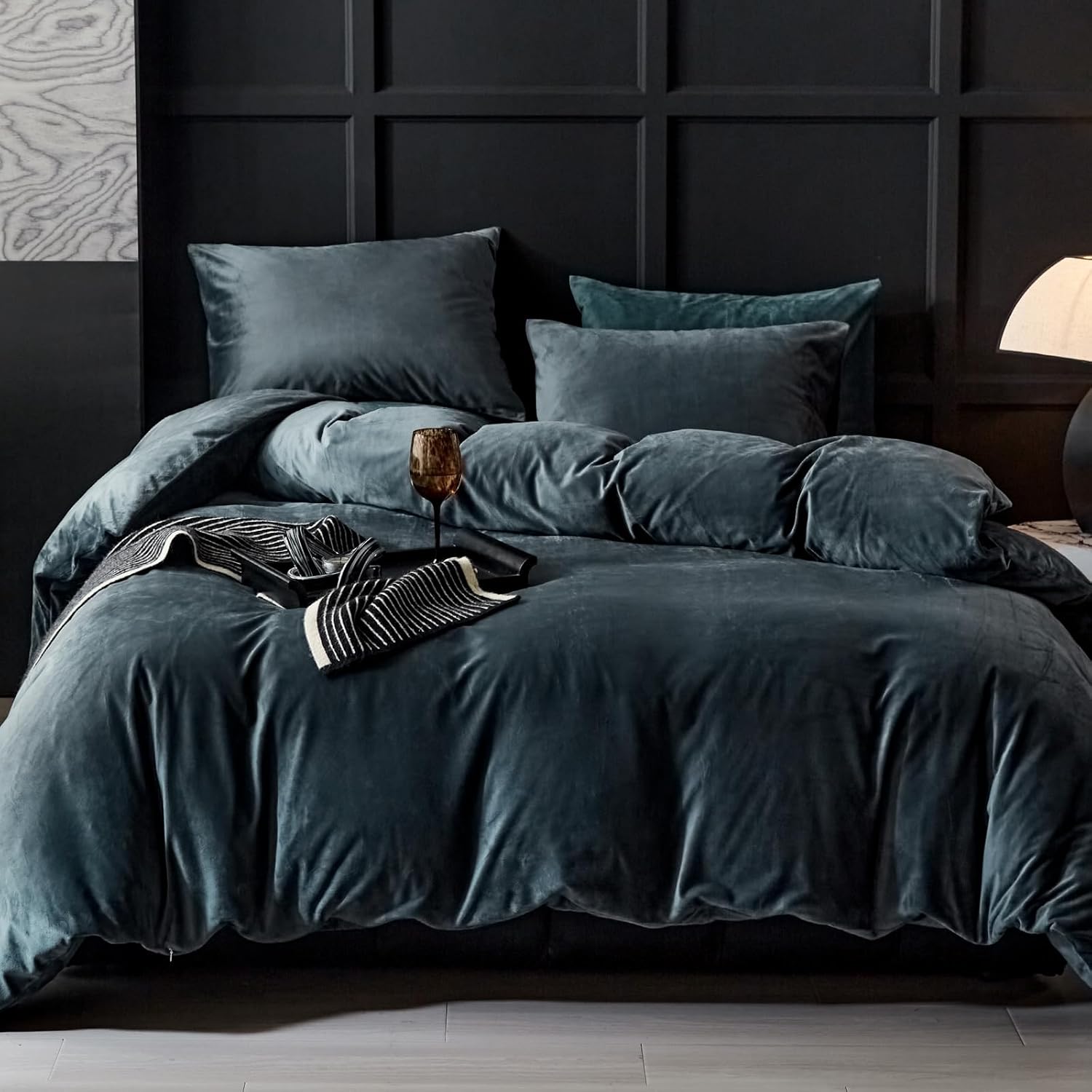
    Dark academia bedding looks intentional and layered, not casual or undone. Linen, cotton percale, velvet, and subtly patterned duvets in deep or muted tones give the bed visual weight.

    The key is restraint, not messiness. Wrinkles are fine, but everything still feels considered. Weighted duvets, stacked pillows, and rich textures create a bed that looks studied and composed, not styled for a catalog or smoothed within an inch of its life.

    6. Low, Warm Lighting

    Lighting in a dark academia bedroom should feel soft and directional, not bright or overhead. Table lamps, shaded sconces, and warm bulbs create pockets of light that make the room feel intimate and layered.

    Avoid cool or stark lighting. Amber-toned bulbs and fabric shades soften dark walls and bring out the warmth in wood, art, and textiles.

    May include: A collection of antique books with various titles and colors. The spines display titles like "Capital Stories About Famous Americans" and "Fifty-Two Stories for Girls." The books are arranged vertically, showcasing their aged covers and decorative elements.

    7. Stacks of Old Books as Decor

    Books are more than background in a dark academia bedroom. Stacked on nightstands, desks, or even the floor, they add texture and reinforce the scholarly feel.

    Hardcovers with worn spines, muted colors, and uneven heights look best. Function matters less than presence here. The books should feel accumulated over time, not arranged for symmetry.

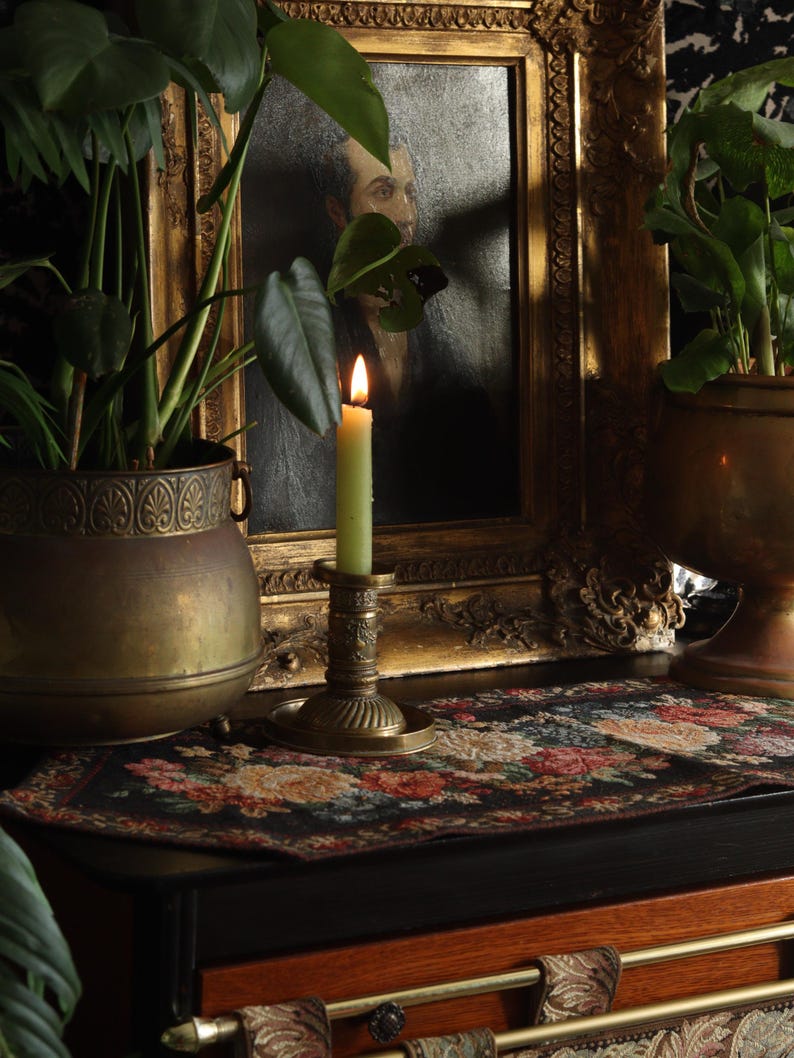
    May include: A lit green candle in a brass candlestick sits on a black and floral patterned table runner. A brass planter with a green plant is in the background.

    8. Brass and Aged Metal Accents

    Brass, bronze, and antiqued metal details quietly elevate a dark academia bedroom. Think lamps, frames, trays, or hardware with warm, timeworn finishes rather than anything shiny or chrome.

    These metals add depth and contrast against dark walls and wood furniture. The patina matters. Slightly dull, brushed, or aged reads intentional and old-world, not decorative-for-the-sake-of-it.

    9. Architectural Mirrors

    Mirrors in a dark academia bedroom should feel structural, not decorative. Arched tops, heavy frames, and antique-inspired shapes add depth while reflecting light without breaking the mood.

    A single large mirror leaning against the wall or mounted above a dresser works better than multiple small ones. Slight imperfections or aged finishes enhance the old-world feel.

    10. Writing Desks and Study Corners

    A dark academia bedroom feels incomplete without a place to read or write. A small wooden desk, secretary, or console instantly shifts the room from decorative to scholarly.

    It doesn’t need to be large or practical. Even a narrow surface with a chair, lamp, and a few books is enough to create that study-at-home feeling that defines the aesthetic.

    11. Velvet, Leather, or Upholstered Seating

    A single upholstered chair adds weight and function to a dark academia bedroom. Velvet, leather, or structured fabric seating reinforces the old-world, academic feel while giving the room a place to pause.

    Look for darker tones and classic shapes rather than anything overly plush or modern. The chair should feel considered, not decorative.

    12. Floor-Length Curtains

    Curtains in a dark academia bedroom should feel heavy and intentional. Floor-length panels in linen, velvet, or thick cotton frame the space and soften dark walls without overpowering them.

    Hack: you don’t have to mount the curtain rod right on top of the window. Hang it closer to the ceiling and extend it wider than the window so the curtains stack off to the sides. It makes the window look taller and the room feel more dramatic.